
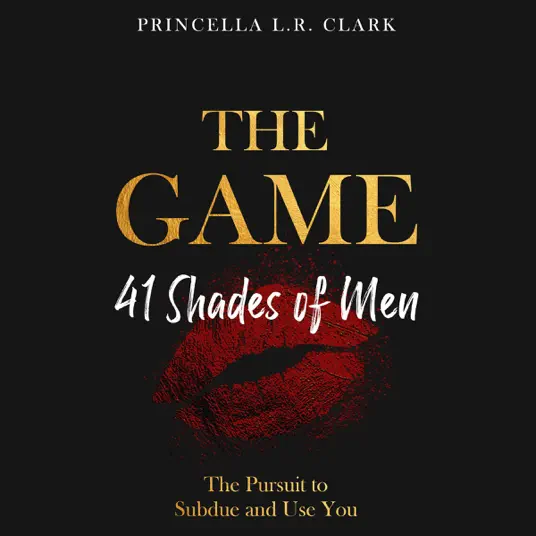
Hey, bestie! Grab your coffee (or wine, no judgment!), because we’re diving into The Game: 41 Shades of Men: The Pursuit to Subdue and Use You by Princella L.R. Clark. This book? It’s like a wake-up call wrapped in a hug, spilling the tea on male psychology in modern dating. Whether you’re single, taken, or just curious, Clark’s guide is a game-changer for navigating the wild world of relationships.
After 25 years of studying men’s behavior, Clark breaks down 41 different motivations, or “shades” behind why men pursue women, and trust me, it’s eye-opening. As someone who’s had her fair share of “why did he do that?” moments, I’m here to walk you through the key insights, chapter by chapter, with a sprinkle of my own dating stories to keep it real. Let’s get started!
Table of Contents
Why This Book Matters (and Why You’ll Relate)
Dating today feels like a maze with no map, right? One minute, you’re vibing with someone; the next, you’re left wondering what went wrong. Clark gets it. She argues that women often lack insight into male psychology, leaving us vulnerable to manipulation, heartbreak, or just plain confusion.
Her book isn’t about bashing men, it’s about empowering you to spot red flags, understand intentions, and make choices that protect your energy. With 41 archetypes, Clark covers the spectrum of male behavior, from the sneaky to the sincere, giving you tools to level the playing field.
I remember swiping through dating apps, thinking I’d cracked the code with a charming guy who seemed perfect, until he ghosted me after I helped him through a work crisis. Reading Clark’s book made me realize he fit one of her “shades” (spoiler: the “User”). This post will break down her insights, so you can avoid my mistakes and walk into dating with confidence.
Clark’s Core Message: Knowledge Is Power
Clark’s main point is bold: most men aren’t driven by romantic love but by self-preservation and personal gain. Ouch, right? She says women often chase fairy-tale romance while men see relationships as a means to serve their needs, whether emotional, financial, or physical.
Her 41 shades outline the motivations behind their pursuit, from power plays to ego boosts. Each chapter dives into a specific archetype, blending psychological insights with real-world examples. Unlike other dating books that focus on “dark triad” traits (narcissism, Machiavellianism, psychopathy), Clark’s approach is broader, covering everyday behaviors and subtle manipulations.
Her tone is unapologetic, she famously says, “It’s not ‘some men.’ It’s the overwhelming majority of them.” While some readers find her writing style straightforward rather than polished, the raw honesty resonates. As one reviewer noted, “This book is necessary reading for any woman, single or attached” because it validates instincts you might not have articulated. Let’s explore the key themes and chapters, with a few personal stories to make it click.
41 Shades of Men Summary
Understanding Male Psychology
Clark starts by setting the stage: women are often in the dark about what drives men. She argues that without this knowledge, we risk losing time, energy, and even money in relationships that don’t serve us.
Her first few chapters lay out the psychological framework, introducing the idea that men’s actions are strategic, not always emotional. She emphasizes self-preservation as a core driver, which hit home for me. I once dated a guy who seemed sweet but always needed “support” (read: me paying for dinners). Clark’s insight made me see he was prioritizing his needs, not our connection.
Key Takeaway: Men’s pursuit often has an agenda. Clark’s book is your decoder ring to spot it early.
Chapter 1: The Charmer
The “Charmer” sweeps you off your feet but disappears when things get real. Clark breaks down their tactics: love-bombing, flattery, or playing the victim to gain trust. I fell for a Charmer once, dazzled by his compliments until I realized he was juggling multiple women. Clark’s advice? Watch for consistency over words. If his actions don’t match his charm, run.
Ask direct questions early, like, “What are you looking for?” If he sidesteps, he’s likely a Charmer.
Chapter 2: The User
Clark describes men who see women as resources, think financial support, emotional labor, or social status. A reviewer on Reddit noted, “Men see women as resources and they use us to their advantage!” This hit me hard, remembering how I’d play therapist for a guy who never reciprocated. Clark’s tip: set boundaries early and notice if he only shows up when he needs something.
Track reciprocity. If you’re always giving and he’s always taking, you’ve got a User on your hands.
Chapter 3: The Controller
This archetype seeks dominance, often through subtle tactics like guilt-tripping or gaslighting. Clark provides real-world examples, like a man who demands constant attention while dismissing your needs. A Goodreads reviewer said, “You’ll match your exes to the chapters,” and I did, spotting a Controller who made me feel guilty for prioritizing my career. Her advice: trust your gut when someone’s trying to shrink your world.
Test his reaction to your independence. A Controller will push back when you set boundaries.
Chapter 4: The Virility Man
This shade is bold, Clark says the Virility Man uses physical intimacy as a weapon, often to “slow you down” with children or prove his masculinity. He might push for unprotected intimacy or focus heavily on physical connection over emotional bonding.
A guy I dated kept pushing for “no strings” intimacy, claiming it was “natural.” Clark’s take on the Virility Man made me realize he was more about his ego than us. I walked away and felt so empowered. Her advice: prioritize your goals and don’t let his agenda derail you. Watch for pressure around physical decisions. A Virility Man often ignores your comfort zone.
Chapter 5: The Romantic
Clark argues that men use “love” as a power card, feeding into women’s romantic fantasies. But here’s the tea: his “love” is often a tactic to hook you emotionally, not a genuine commitment. Clark warns that Romantics use your desire for fairy-tale romance to keep you invested while they pursue their own agenda, maybe validation or control.
This one stung. I once fell hard for a guy who wrote me poetry, only to learn he was recycling lines for multiple women. Tip: look for actions that back up sweet words, and don’t let romance blind you. Ask for tangible commitment early, like meeting friends or planning a future together. If he dodges, he’s likely a Romantic playing a role.
Chapter 6: The DL Man
The DL (Down Low) Man is a shade Clark highlights for his secrecy, often hiding his true identity or lifestyle, like pursuing women while secretly involved with men or leading a double life. Clark explains that his pursuit is driven by a need to maintain a façade, using you to project a certain image.
This archetype can be tricky because his charm masks his dishonesty. Tip: watch for inconsistencies in his stories or reluctance to share details about his life. Probe gently about his routines or social circle. A DL Man will get defensive or evasive when pressed.
Chapter 7: The Fellatio Man
This shade is bold, Clark describes the Fellatio Man as fixated on specific sexual acts, often prioritizing his physical desires over emotional connection. His pursuit is less about you and more about fulfilling a fantasy or boosting his ego. Clark warns that he may pressure you into acts that make you uncomfortable, framing it as “intimacy.”
Her advice? Set clear boundaries around physical intimacy and don’t let flattery cloud your judgment. If he’s overly focused on physicality early on, say, “I need to build trust first.” His reaction will tell you everything.
Chapter 8: The Sex Deprived Man
Clark’s Sex Deprived Man pursues women to fill a perceived void, often blaming past partners or circumstances for his lack of intimacy. He may come off as needy or overly eager, using pity to gain your sympathy.
A Reddit reviewer mentioned, “Men see women as resources and they use us to their advantage!” and this shade fits that vibe. Clark advises watching for signs he’s more interested in physical gratification than building a relationship. Notice if he guilt-trips you into physical intimacy. A Sex Deprived Man often leans on sob stories to manipulate.
Chapter 9: The Opportunist
The Opportunist sees you as a stepping stone to something else, maybe social status, a job, or connections. Clark explains that he’s strategic, charming you to gain access to your resources or network. His interest fades once he gets what he wants.
Tip: pay attention to whether his attention aligns with your achievements or opportunities. Test his interest by limiting access to your resources. If he pulls back, you’ve spotted an Opportunist.
Chapter 10: The Avoider
The Avoider is the king of dodging commitment. Clark describes him as charming but elusive, always with an excuse for why he can’t define the relationship. He keeps you hooked with just enough attention to string you along.
Tip: don’t chase his crumbs, demand clarity early. Ask, “Where do you see this going?” An Avoider will deflect or disappear.
Chapter 11: The Validator
This guy seeks you out to boost his ego. Clark says the Validator needs your admiration to feel good about himself, often fishing for compliments or validation. He may shower you with attention but only to get it back tenfold.
Her advice: notice if he’s more interested in your praise than your personality. Hold back excessive praise and see if he sticks around. A Validator will lose interest if you don’t feed his ego.
Chapter 12: The Taker
Similar to the User but more blatant, the Taker is all about what he can extract time, money, or emotional energy. Clark warns that he rarely reciprocates, leaving you drained. Her tip: track how often you’re giving versus receiving in the relationship.
Tip: Set small boundaries, like declining a favor. A Taker will push back or bail.
Chapter 13: The Performer
The Performer loves the spotlight and uses relationships to enhance his image. Clark describes him as the guy who dates you to look good in front of others, like a trophy. He’s less interested in you than in how you make him appear.
Clark’s advice: watch for signs he’s more focused on public perception than private connection. Notice if he’s more engaged in public than private. A Performer thrives on the audience, not you.
Chapter 14: The Fixer
The Fixer pursues women he sees as “projects,” aiming to “save” or change them. Clark explains that his help comes with strings, he wants control or gratitude. Her tip: be wary of unsolicited advice or attempts to “improve” you. Reject unsolicited fixes with, “I’m happy with my choices.” A Fixer will push harder or lose interest.
Chapter 15: The Dreamer
The Dreamer sells you big promises, future plans, grand adventures but rarely follows through. Clark warns that his talk of “someday” keeps you hooked without real commitment. Her advice: focus on his actions today, not his dreams for tomorrow.
I fell for a Dreamer who talked about “our future” but couldn’t plan a simple date. Clark’s reality check helped me move on. Ask for concrete steps toward his promises. A Dreamer will falter under scrutiny.
Chapter 16: The Competitor
This shade thrives on rivalry, even in relationships. Clark describes the Competitor as someone who sees you as a conquest or a way to outdo others. He may compare you to exes or push you to compete for his attention. Her tip: don’t play his game, set your own standards. Call out comparisons with, “I’m here for a partnership, not a contest.” A Competitor will back off.
Chapter 17: The Charlatan
The Charlatan is a master of deception, spinning lies to gain trust. Clark says he might exaggerate his achievements or hide his true intentions. Her advice: verify his stories through mutual contacts or observation. Cross-check his claims. A Charlatan’s stories unravel under scrutiny.
Chapter 18: The Rescuer
Similar to the Fixer but with a savior complex, the Rescuer seeks women in distress to “save” for clout or control. Clark warns that his help often comes with expectations. Her tip: don’t let his “heroics” mask manipulation. Decline over-the-top help with, “I’ve got this.” A Rescuer needs you to need him.
Chapter 19: The Drifter
The Drifter floats through relationships with no clear direction, often leaving you to pick up the pieces. Clark says he’s charming but unreliable, drifting in and out based on whim. Her advice: don’t invest in someone who can’t commit to a plan. Test his reliability with small commitments, like showing up on time. A Drifter will flake.
Chapter 20: The Manipulator
The Manipulator uses subtle tactics; guilt, flattery, or gaslighting, to bend you to his will. Clark emphasizes that he’s skilled at making you doubt yourself. A Manipulator once made me question my memory over small arguments. Her tip: trust your instincts and document interactions to spot patterns. Keep a record of conversations. A Manipulator’s lies show up in the details.
Chapter 21: The Provider
The Provider uses financial support to gain influence, expecting loyalty or control in return. Clark warns that his generosity often has strings attached. Her advice: ensure financial interactions are mutual, not one-sided. Offer to split costs early. A Provider will resist if he’s using money as leverage.
Chapter 22: The Escapist
The Escapist pursues you to avoid his own problems, using the relationship as a distraction. Clark says he’s emotionally unavailable and may vanish when his issues resurface. Her tip: watch for signs he’s running from himself. Ask about his life goals. An Escapist will dodge deep questions.
Chapter 23: The Narcissist
A classic shade, the Narcissist craves admiration and puts himself first. Clark connects this to the Dark Triad (narcissism, Machiavellianism, psychopathy), noting his lack of empathy. Her advice: don’t feed his ego, set firm boundaries. Limit attention to test his reaction. A Narcissist will lash out or leave.
Chapter 24: The Player
The Player juggles multiple partners, thriving on the thrill of pursuit. Clark warns that his charm is a trap to keep you in rotation. Her tip: demand exclusivity early to expose his game. I fell for a Player’s smooth talk until I noticed his “emergencies” always happened during date nights.. Ask for transparency about his dating life. A Player will avoid or lie.
Chapter 25: The Idealist
The Idealist projects his fantasy of the “perfect” partner onto you, ignoring your real self. Clark says he’s in love with an idea, not you. Her advice: stay true to yourself and don’t mold to his expectations. Be unapologetically yourself. An Idealist will push back if you don’t fit his mold.
Chapter 26: The Critic
The Critic uses “feedback” to undermine your confidence, often disguised as concern. Clark warns that his critiques are about control, not improvement. Her tip: reject unsolicited advice and trust your worth. Respond to criticism with, “I’m good with who I am.” A Critic will double down.
Chapter 27: The Chameleon
The Chameleon adapts to whatever you want, mirroring your interests to win you over. Clark says his lack of authenticity is a red flag, he’s playing a role. Her advice: test his consistency over time. Change your interests and see if he follows. A Chameleon will shift to match.
Chapter 28: The Leech
The Leech clings to you for emotional or financial support, draining your energy. Clark warns that he thrives on dependency. Her tip: limit your availability to see if he can stand on his own. Say, “I need space to focus on me.” A Leech will panic or guilt-trip you.
Chapter 29: The Show-Off
The Show-Off uses flashy displays, cars, gifts, or status to impress you. Clark says his pursuit is about proving himself, not building a connection. Her advice: focus on his character, not his possessions. Compliment his values, not his stuff. A Show-Off will pivot to material things.
Chapter 30: The Ghost
The Ghost disappears without warning, only to reappear when it suits him. Clark warns that he’s unreliable and keeps you on edge. Her tip: don’t chase, let him stay gone. Block his number after the first ghosting. A Ghost thrives on your patience.
Chapter 31: The Martyr
The Martyr plays the victim to gain sympathy and control. Clark says he uses guilt to keep you invested. Her advice: don’t fall for sob stories, verify his claims. Offer empathy but not solutions. A Martyr will push for more.
Chapter 32: The Strategist
The Strategist plans every move, treating relationships like a chess game. Clark warns that his pursuit is calculated, often for power or gain. Her tip: disrupt his plans with unpredictability. Be spontaneous to test his flexibility. A Strategist hates losing control.
Chapter 33: The Dream Seller
Similar to the Dreamer but more manipulative, the Dream Seller promises a perfect future to keep you hooked. Clark says his promises are empty. Her advice: demand action now, not later. Ask for immediate steps toward his promises. A Dream Seller will stall.
Chapter 34: The Gatekeeper
The Gatekeeper controls access to opportunities or affection, making you “earn” his approval. Clark warns that he uses this power to keep you insecure. Her tip: don’t beg for his validation, set your own standards. A Gatekeeper made me feel like I had to prove my worth for his time. Clark’s book reminded me I’m enough.
Tip: Walk away from anyone who makes you audition for their affection.
Chapter 35: The Storyteller
The Storyteller spins elaborate tales to impress or manipulate. Clark says his stories often exaggerate his worth or hide his flaws. Her advice: fact-check his claims and trust your gut. Ask for specifics on his stories. A Storyteller’s lies crumble under details.
Chapter 36: The Controller’s Cousin
A subtler shade of the Controller, this guy uses passive-aggressive tactics to steer your behavior. Clark warns that he avoids direct conflict but still aims to dominate. A guy sulked when I made plans without him. Her tip: call out passive-aggression directly. Say, “I notice you’re upset, let’s talk openly.” He’ll squirm if he’s this shade.
Chapter 37: The Attention Seeker
The Attention Seeker craves your focus and will act out to get it. Clark says he may create drama or play the victim to stay center stage. Her advice: don’t reward his antics with attention. Ignore dramatic outbursts. An Attention Seeker will escalate or move on.
Chapter 38: The Bargainer
The Bargainer treats relationships like transactions, expecting something for every “favor.” Clark warns that he keeps a mental ledger of your debts. Her tip: keep interactions mutual and debt-free. Offer to split costs or favors. A Bargainer will resist fairness.
Chapter 39: The Isolator
The Isolator tries to cut you off from friends or family to gain control. Clark says he may frame it as “wanting you all to himself.” Her advice: maintain your support network at all costs. Prioritize your loved ones. An Isolator will push back against your independence.
Chapter 40: The Pretender
The Pretender fakes emotions or values to win you over, but his mask slips over time. Clark warns that his inauthenticity shows in small inconsistencies. Her tip: observe him in different settings to spot the act. Compare his words across contexts. A Pretender’s act won’t hold up.
Chapter 41: The Rare Gem
Clark ends on a hopeful note with the Rare Gem, the guy who aligns with your values and respects you fully. But she’s skeptical, warning that even “good guys” can have hidden motives. Her advice: vet him thoroughly and prioritize your standards. A reviewer noted, “There’s a small glimmer of hope to find a good guy, but you must be diligent.”
I thought I found a Rare Gem, but he turned out to be a Charmer in disguise. Clark’s vigilance saved me from settling. Tip: Test his integrity over time. A true Rare Gem shows up consistently, no games.
Practical Tools: Red Flags and Empowerment
Each chapter ends with actionable advice, how to spot warning signs, set boundaries, and reclaim your power. Clark emphasizes self-awareness, urging women to “decenter men” and focus on their own goals.
For example, she suggests journaling to recognize patterns in your dating history. I tried this and was shocked to see how often I ignored red flags, like inconsistent texting or vague plans. Her tools are practical, like:
- Red Flag Checklist: Does he respect your time? Is he transparent about his intentions? If not, he might fit one of the 41 shades.
- Boundary-Setting Scripts: Simple phrases like, “I need clarity on where this is going,” to assert your needs.
- Self-Reflection Prompts: Questions to help you prioritize your values over romance.
My Dating Wake-Up Calls
Clark’s book felt like a bestie sitting me down for a reality check. One story stands out: I dated a guy who seemed like a dream, attentive, funny, always planning cute dates. But after reading about the “Charmer,” I realized he only showed up when it suited him. When I needed support during a tough week, he was “too busy.” Clark’s book helped me see I was giving more than I got, and I ended things with confidence.
Another time, I met a “Controller” who critiqued my outfits and suggested I “tone down” my ambition to “fit” his lifestyle. Clark’s chapters on manipulative shades gave me the language to call it out and walk away. Her book isn’t just about men, it’s about trusting yourself to choose better.
FAQs: Your Burning Questions Answered
Q: Is this book just for single women?
Nope! Whether you’re single, dating, or married, Clark’s insights help you understand dynamics in any relationship. It’s also great for self-discovery, as one reader said it helped her “understand who you are as a woman.”
Q: Does Clark bash men?
Not exactly, she’s blunt but fair. She focuses on patterns, not individuals, and encourages women to protect their energy, not hate men. Her goal is empowerment, not division.
Q: Is the book backed by research?
Clark draws from 25 years of observation, not statistical studies, which some readers critique. But her real-world examples and psychological insights feel spot-on, especially if you’ve lived through similar experiences.
Q: How do I apply this to dating apps?
Clark’s red flags work online too. Watch for inconsistent messaging, love-bombing, or guys who dodge questions about their intentions. Her boundary-setting tips are gold for keeping convos real.
Why This Book Is a Must-Read
The Game: 41 Shades of Men isn’t just a dating guide, it’s a wake-up call to prioritize yourself. Clark’s 41 archetypes, from Charmers to Controllers, give you a roadmap to spot who’s worth your time and who’s playing games. Her no-nonsense approach, paired with practical tools, makes this book a lifeline for navigating modern dating. As someone who’s been burned by a few “shades,” I can say it’s helped me trust my instincts and set fiercer boundaries.
Take Control of Your Dating Life
Ready to dive in? Grab The Game: 41 Shades of Men on Amazon or check out Princella Clark’s YouTube channel, The High Powered Podcast, for more insights. Start journaling your dating patterns, and try one of Clark’s boundary-setting scripts next time you’re chatting with a match. You’ve got this, bestie
What’s your biggest dating struggle right now? Drop a comment below, and let’s chat about how Clark’s wisdom can help. Or share your own “shade” story, I’m all ears!