There’s a unique hum that lives inside certain spaces, a kind of magnetic rhythm that can only emerge when purpose, power and beauty collide.
That hum echoed softly yet powerfully through the open glass doors of Sustainable Design Spaces, her architectural sanctuary nestled within the leafy embrace of Runda, Nairobi’s greenest jewel.
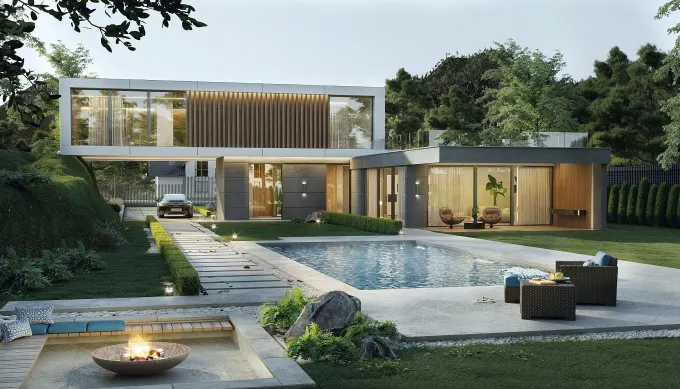
From the outside, it looked like a modernist greenhouse: expansive glass panes reflecting the sky, a steel frame softened by curtains of jasmine vines, reclaimed wood carved into poetic symmetry. But step inside and you’d feel something more. This wasn’t just a studio. This was intention, embodied.
The air was alive with the scent of freshly brewed coffee, earthy clay and blooming gardenia. Sunlight poured in like honey across design tables littered with swatches of natural fiber, seedling trays, sketches and dreams. Along the walls hung framed blueprints, not just of projects completed, but of a vision coming to life.
This space held echoes of memory, whispers of legacy and the quiet revolution of a woman who once sketched dreams in the silence of her bedroom while her baby slept beside her. Now, she was designing cities. And not for ego. Not for applause. But for healing. For the land to breathe again. For her name to mean something long after her footsteps left the soil.
When she launched Sustainable Design Spaces, Nairobi was dry. Not just in rainfall, but in imagination. Estates looked like parking lots. Offices felt like concrete deserts, soulless, sterile, suffocating. Hotels boasted imported palm trees that browned within weeks. Even schools built fields without shade.
She looked around and saw… emptiness. And yet, she saw potential. She remembered elders who sat under jacaranda trees. Playgrounds framed by flowering lantana hedges. Tea breaks taken in avocado groves. She remembered what we used to have, before Western landscaping stripped it bare.
From a modest shared studio in Westlands, she started sketching not just structures, but remembrance. She wanted to build a new Nairobi. One that honored its roots. One where healing grew from the ground up. Everyone told her it wouldn’t work. “Green doesn’t sell,” they said. “Corporate wants concrete. Native plants are too ordinary.” But she didn’t build to sell. She built to heal.
She remembered it clearly: her first ever client. A soft-spoken middle-aged woman from Lavington who wanted to transform her backyard. Nothing fancy, just a space to sit, sip tea and breathe. But she couldn’t picture anything beyond a patio set.
The founder, just freshly graduated at the time, didn’t have a lush portfolio. She had no team. No renderings. She had only her heart. A sketchpad, her laptop, her intuition and a promise: “I don’t just design spaces. I design how you’ll feel inside them.”
That small backyard transformation opened a ripple in the universe. That woman told her friends. Those friends became clients. And from that, a garden empire quietly began to grow.
Within two years, her firm was being called upon to green courtyards in Acacia Premier Hotel, craft rooftop sanctuaries for Nairobi high-rises, design sensory meditation gardens for hospitals and curate native healing landscapes for private estates in Karen, Runda and Nyari.
But she never lost her compass. Each project was a prayer. Each site visit, a meditation. Each garden, a chance to rewrite a forgotten story. And at the center of it all? Her. The visionary. The soil whisperer. The architect of memory.
Once Acacia bloomed, Nairobi came calling. Hotels wanted healing courtyards. Tech campuses wanted sensory gardens for employee burnout. Families in Karen wanted edible landscapes, with lemongrass walkways and butterfly hedges. Executives in Runda wanted privacy sanctuaries rooted in indigenous textures.
Everywhere she went, she reminded people: Beauty doesn’t have to come from abroad. Elegance doesn’t mean artificial. Healing isn’t an aesthetic, it’s a right. She refused to use plastic turf. Refused to uproot native plants just because “they look ordinary.” Refused to copy Western Pinterest templates.
Her landscapes breathed. And soon, her slogan became legendary:
“Beauty that breathes. Design that remembers.”
As the firm grew, she hired slowly and soulfully. Inside the light-filled studio, her team moved like a symphony. Mercy, her junior designer, just 24 but with an old soul. She had a way of pairing color palettes and indigenous textures that made spaces feel like lullabies.
James, her branding genius, who could make a vertical garden go viral and turn irrigation into art with one IG reel. Shiku, the operations anchor. Silent during meetings, but a lioness under pressure. Once, during a supply chain crisis, she coordinated six site deliveries without breaking a sweat.
Ali, a former mechanic from Ngong, trained personally by her in irrigation systems, now ran all site operations across Kenya. Each one had their origin story. Each one treated the work like ministry.
These were not employees. They were visionaries. Co-dreamers. Sacred allies. They were her tribe. She had handpicked every one of them, not for resumes, but for resonance. She could sense when someone’s spirit aligned with her mission. And when it did, she gave them wings.
The studio wasn’t just a workplace. It was a womb. They worked in a space that nurtured their greatness: mood boards pinned with tropical ferns, playlists curated to evoke flow, filtered water infused with lime and mint and flexible work hours that honored life outside the grind.
Every Friday, they held “Legacy Lunches” where they didn’t talk about deadlines, they talked about dreams.
And every Friday, without fail, she asked each one: “What are you building that will outlive you?” Because that, always that, was the point.
She didn’t just design gardens. She designed cultural healing experiences.
One of her proudest projects was Healing Park in Eastlands, a once-neglected dumpsite that she transformed into a sanctuary of sensory restoration and radical hope. At its heart stood a sound healing amphitheater, ingeniously constructed using recycled tires for their natural acoustic properties. Nearby, community herb beds overflowed with rosemary, lemongrass and aloe, plants chosen not just for their healing properties, but for their symbolic lineage in traditional medicine.
A sculpture garden, vibrant and defiant, showcased pieces crafted by local teens using reclaimed metal, each artwork telling a story of transformation. The project was deeply personal, inspired by her own family’s long battle with hypertension and the childhood absence of safe green spaces. Here, healing wasn’t hypothetical; it was planted, grown and shared. The impact? Beyond measure.
Then there was Jasiri Towers in the heart of Nairobi’s CBD. Once a sterile helipad atop a commercial high-rise, it was reimagined as a lush urban refuge, a floating jungle of Nairobi-native flora. Lavender and eucalyptus created calming pathways for overstimulated minds, while shaded nooks invited executives to pause, breathe and remember they were human.
Butterfly pollinator stations flitted with life, becoming unexpected emblems of the city’s rebirth. The space became so iconic that her son, after wandering through it during one golden afternoon, looked up at her and said, “It’s like a floating jungle.” The name stuck and so did the magic.
It wasn’t long before her designs became philosophy. She took the stage at Nairobi Design Week, then TEDx, then Pan-African Urbanism Summits. She gave a talk titled: “Designing Your Destiny: Landscapes as Memory” – 1.3M views, shared in over 20 countries.
Standing before an auditorium of world-class architects, she declared:
“We are not here to decorate spaces. We are here to re-indigenize them. We’re not saving the planet. We’re returning to her.”
The standing ovation lasted seven minutes. One quote stayed with her above all: People will never know how a place was designed, people will rarely know who designed it, but people will always remember how it made them feel.
Despite the rising fame and awards, she stayed rooted. She still visited plant nurseries in Dagoretti. Still dug her fingers into the earth before any project. Still taught weekend classes for girls in high schools titled: “Grow Where You Stand.” Because for her, design was never just about visuals. It was a rebellion. Restoration. A radical act of remembrance.
One clear Saturday morning, she stood in her rooftop garden. Butterflies danced above her frangipani. Bees hummed through her lavender beds. Her phone buzzed, another award, another high-budget client. She smiled, silenced the phone and whispered: “I already won.”
Because the award was not the title. It was the peace. It was this moment. This space. This stillness.
People often asked her, “How did you scale both businesses without losing yourself?” And her answer was always the same: “I didn’t chase numbers. I chased alignment.” She said no more than she said yes. No to clients who didn’t respect her time. No to rushed projects that compromise quality. No to burnout disguised as ambition.
She focused on brand energy, not just revenue. She worked only with those whose values matched her own. And yet… The numbers followed. Millions in annual revenue. Six-figure contracts closed over avocado toast and hibiscus tea. A waiting list for private design consults that stretched into the next year. She had become the kind of businesswoman she used to read about in magazines. And now… she was writing her own feature.
As Garo Gift Shop and Sustainable Design Spaces thrived, her focus began to expand. Not out of dissatisfaction, but vision. She was ready to merge worlds. To create living systems that bridged commerce, culture and climate consciousness. She began planting seeds for her next horizon, where home, community, spirituality and design converged into living sanctuaries.
The foundation was already laid. The future was whispering again. And this time, it was louder than ever. It was time to build more than spaces. It was time to build sanctuaries.
Related: Name it Into Existence