“She who once survived, now sings.”
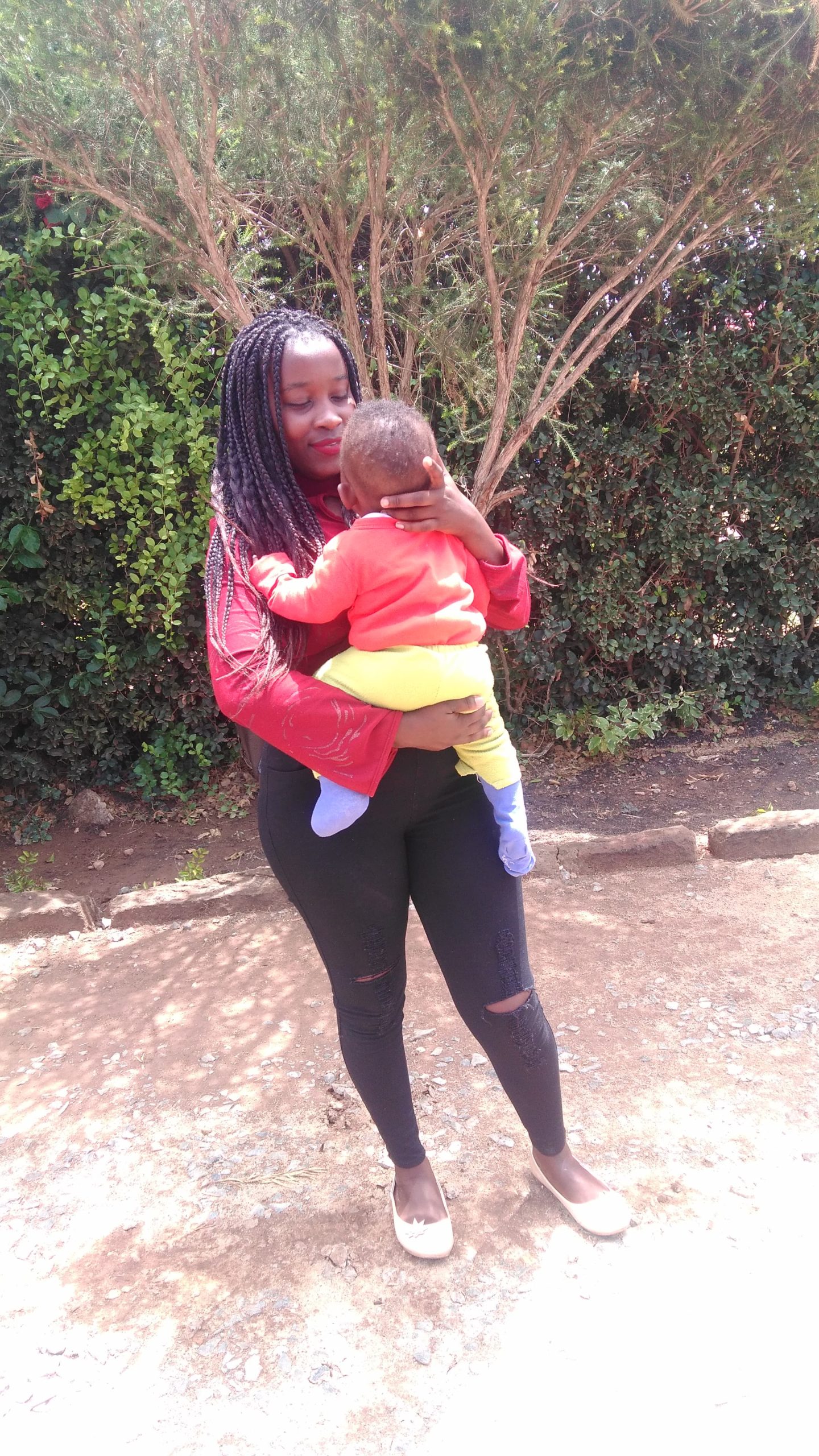
There was a time Vinaywa thought softness was a privilege for others. Not for the firstborn daughter carrying a family’s dreams on her back. Not for the nineteen-year-old with cracked hands, balancing a baby on one hip and a coursebook in the other. Not for the girl whose joy had to shrink so everyone else could breathe.
But that season had ended.
Now, her laughter filled rooms before she did.
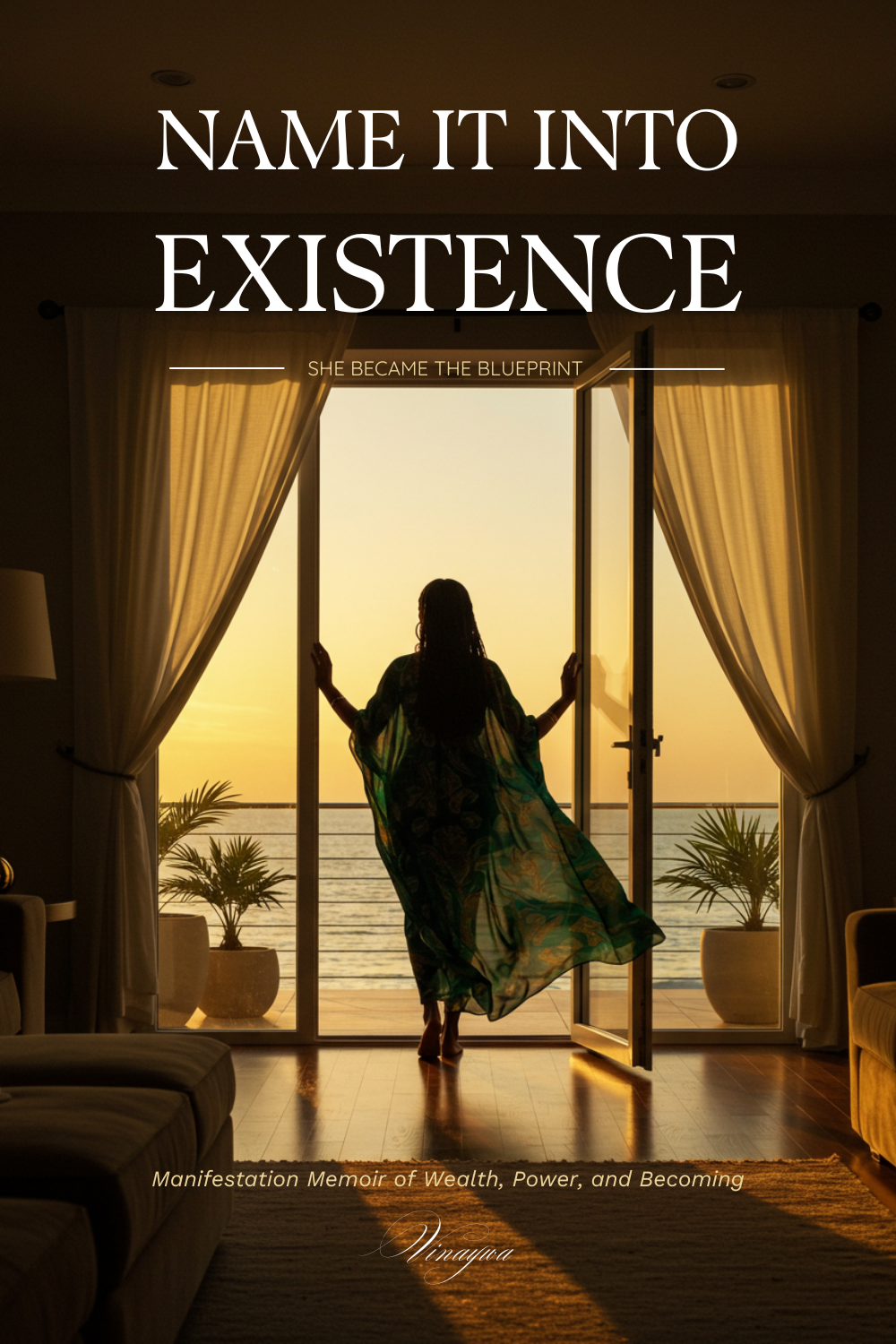
It started quietly, on a random Tuesday afternoon in Diani. The kind of day that smelled like salt and possibility. She had just wrapped up a board call with her Sustainable Design Spaces executive team, sipping coconut water on the villa’s balcony while the sun melted into the sea. Adriel was down at the shore, chasing waves, his laughter carried by the wind.
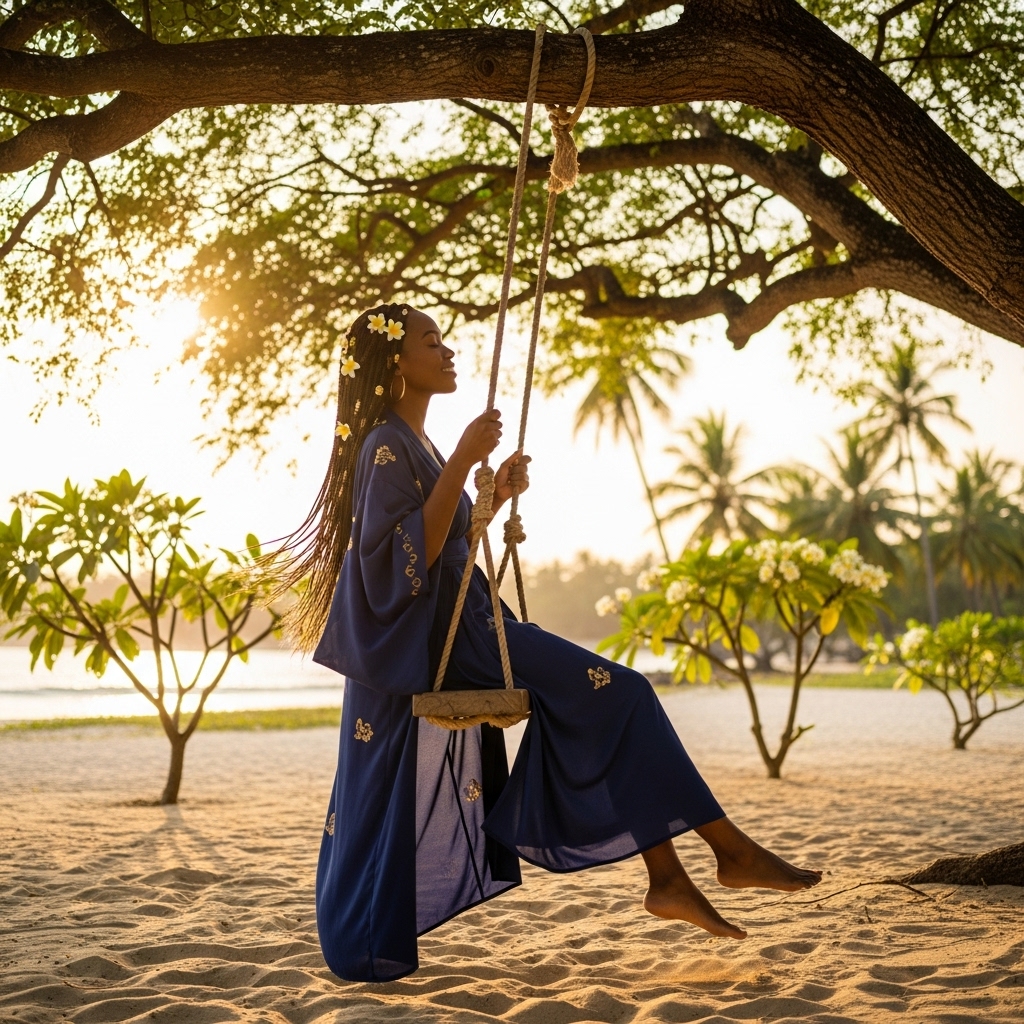
That’s when she saw it, a swing her landscaper had hung from the giant tamarind tree near the garden. Handmade ropes. A wooden seat carved from mango wood. She hadn’t noticed it all week, yet now it felt as if it had been waiting for her. Her heart skipped.
She walked to it slowly, almost reverently, as though approaching a memory. Then, without thinking, she sat.
Her toes brushed the sand, and she pushed off gently. The swing creaked. The air moved. And something within her, something ancient, weary, and silent, broke open.
Not a loud crack. Not a dramatic shatter. Just the quiet crumble of a wall that had stood too long.
In that instant, she was seven again, laughing wildly, head tilted back to the sky. No titles. No deadlines. No survival instincts. Just her, flying. The salt wind in her locs. The scent of jasmine floating from the villa garden. The ocean humming in approval.
And for the first time in decades, she felt fully safe, inside herself.
From that moment, she began to design joy into her days with the same precision she once reserved for multimillion-shilling projects. Sunday mornings turned into dance breaks in her penthouse, Sauti Sol, Tiwa Savage, Beyoncé, her barefoot rhythm echoing against marble floors. Thursdays after six were art nights on the rooftop, where she painted without rules, poured wine into her favorite glass, and laughed at the chaos of color.
Monthly solo dates took her to places with no agenda but delight: the museum, the arboretum, vintage markets. She lit candles not to manifest, but to celebrate. She wore silk robes not to seduce, but because they made her inner girl twirl.
She stopped rushing. She started resting. And in rest, the pieces of her soul began to knit themselves back together.
One night, under the soft gold light of her bathroom mirror, she began a ritual she didn’t know she needed. After cleansing her skin and massaging in her vitamin C serum, she wrapped her head in a satin scarf and met her reflection with a trembling kind of tenderness.
“I’m sorry I made you hustle for love,” she whispered.
“I’m sorry I punished your softness.
I’m sorry I confused struggle for worth.”
Her voice cracked. She placed her palm over her heart and cried, not from sadness, but from release. The tears washed away decades of pretending she didn’t need care. They made room for joy to move in permanently.
That night, she wrote in her journal:
“I no longer need to earn rest.
I no longer need to deserve joy.
I am worthy of fun, softness, and ease, simply because I am alive.”
The next month, she threw herself a birthday party, not for the woman she’d become, but for the little girl who only got one.
Her living room transformed into a pastel playground: balloons, a popcorn machine, face paint, and giant bubbles that caught the sunlight. Her best friend Lauren baked a cake shaped like a flower garden. Everyone wore something pink or sparkly. Her sister DJ’d. Her son MC’d.
And Vinaywa? She wore a tutu, golden hoops, and glitter on her cheeks. She danced so hard her curls loosened. She laughed so much her ribs ached. And when it came time to blow out the candle, she didn’t wish for anything grand. She made a vow, quiet but eternal:
“I will never abandon myself again.”
Healing, she learned, wasn’t just about laughter. It was about allowing herself to lean. To ask for help. To cry into someone’s shoulder without apologizing for the weight of her tears.
There were evenings when she curled up on the sofa and let her partner hold her in silence. Mornings when therapy unearthed memories she had buried too deep. Sundays when Adriel surprised her with breakfast in bed and a sticky note that read: “You’re the best mummy in the world. Please rest today.”
These moments weren’t glamorous, but they were sacred. They became the stitching of her soul.
Her life now had a soundtrack, a playlist that healed as much as it hyped. Songs that made her inner child giggle and her adult self groove. Affirmations woven into rhythm: “I am safe. I am loved. I am allowed to enjoy.” Old-school jams she once danced to in her dorm room now echoed through her Muthaiga penthouse, same girl, elevated world.
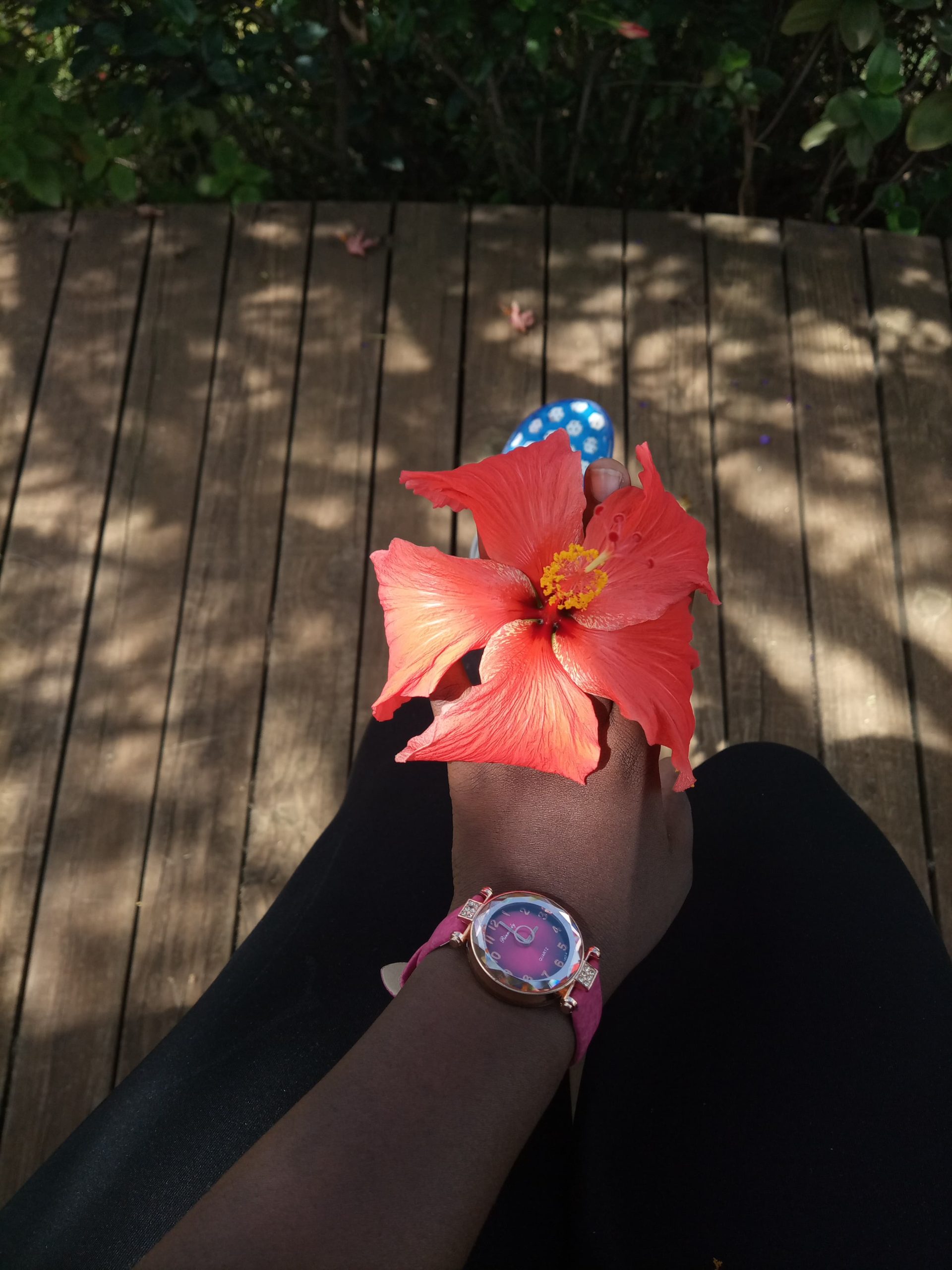
She even made a playlist called “Proof She Bloomed,” and played it every Friday during her flower arrangement ritual, as the fragrance of lilies, eucalyptus, and roses filled the air.
She no longer searched for safety in others. She became it. She no longer waited for permission to rest. She declared it. She no longer made herself small to be loved. She expanded, brightly, boldly, like the sunrise over her Diani villa.
And when she looked in the mirror now, she didn’t see a tired mother or a girl still trying to prove herself. She saw a woman reborn, a woman who had walked through storms and somehow returned home to joy.
Every petal, every dance, every laugh had brought her here.
To this softness.
To this freedom.
To this singing.
She learned that healing wasn’t always a loud rebirth. Sometimes, it was a quiet morning, sunlight slipping through linen curtains, the hum of the kettle, her feet warm against the floor, and no need to rush anywhere. For years, she had moved from task to task like her life was a list to be conquered. But now, she was learning the art of being instead of doing.
She no longer apologized for needing time to herself. Solitude no longer scared her. She realized that silence wasn’t loneliness; it was her soul finally speaking without interruption. In that silence, she found her voice again, soft, sure, and sacred.
There were days she still woke up with echoes of her old habits, the instinct to overextend, to please, to explain. But she caught herself with compassion. Instead of criticizing the pattern, she comforted it. She’d whisper, “It’s okay, love. You’re safe now.” It was strange how foreign gentleness had once felt, and how necessary it had become.
Her self-worth no longer hinged on what she produced or how perfectly she performed. It lived in the quiet knowing that she was enough, even in stillness. She stopped needing to prove her value through exhaustion. She learned to say “no” without guilt and “yes” without fear.
And as she honored her boundaries, life began to honor her back.
Her creativity returned, not as a hustle, but as play. She would sit by the window with her sketchbook, drawing whatever came to mind: flowers, faces, fragments of her imagination. There was no brief, no client, no deadline. Just color, intuition, and flow. Sometimes Adriel joined her, sprawled across the floor with his crayons. They’d draw side by side, her, with watercolors; him, with a wild mess of blues and greens. When he asked her, “Mum, are we playing or working?” she smiled and said, “Both.”
Those afternoons became her new therapy sessions, moments where the line between mother and child blurred into shared wonder. She’d look at him and realize that healing her inner child was also healing his world. She was rewriting the emotional DNA of their lineage, teaching him, through her joy, that it’s okay to rest, to dream, to be soft.
One Saturday morning, while watering her balcony plants, she caught her reflection in the glass, barefoot, smiling, sun kissing her shoulders. There was a time she would have looked for flaws. Now, she simply said, “Thank you.” Thank you to her body for carrying her. Thank you to her heart for staying open. Thank you to her mind for learning peace after years of survival.
She no longer measured her beauty in mirrors but in moments. In laughter that rose from her chest like a hymn. In the way she no longer shrank from compliments. In how she spoke to herself kindly, even when no one was listening.
Self-worth, she realized, wasn’t a destination, it was a daily choice. A devotion. A practice. It lived in her tone when she said her own name. It lived in the decisions she made when no one was watching. It lived in the small rebellions, choosing the restful thing, the nourishing thing, the joyful thing, even when her old self whispered that she hadn’t “earned it.”
She used to think confidence was loud, the kind that filled rooms and silenced doubts. But now, she knew it was quieter. It was the ease of walking into a space and not needing to perform. It was ordering what she wanted without checking the price first. It was walking away from what drained her, even when it was familiar.
She started dressing differently too, not for trends or approval, but for how she wanted to feel. Flowy dresses that swayed like freedom. Perfume that lingered like poetry. Gold jewelry that kissed her skin and reminded her she was allowed to shine.
Her softness didn’t make her weak. It made her magnetic. It drew in experiences and people who matched her new frequency, those who saw her not as someone to save, but someone to celebrate.
Some nights, she’d sit on her balcony, stars scattered across the Diani sky, and think about all the versions of herself she’d had to let go of, the overgiver, the overthinker, the overly strong one. She’d whisper thank you to each of them for doing their best. Then she’d release them with grace.
Healing didn’t mean she no longer felt pain, it meant she no longer abandoned herself when pain arrived.
And that became her promise: to stay. To stay when she was confused. To stay when she was uncertain. To stay when the world got loud and love got complicated.
Because for so long, she’d been there for everyone else, except herself. But now, she was finally her own home.
Her mornings began with affirmations whispered into her mirror:
“I trust myself.”
“I deserve good things.”
“I will not dim my light for anyone.”
“I am proud of the woman I am becoming.”
Each word was a seed, and slowly, she began to bloom again, not for show, but for herself.
She noticed the small joys she used to rush past: the scent of coffee beans, the laughter of strangers, the way Adriel’s hand fit perfectly into hers. Gratitude became her grounding. It wasn’t performative; it was cellular. It lived in her breathing, in her pauses, in her ability to find beauty in the ordinary.
There was a new kind of peace in her, not the one that came from control, but the one that came from trust. Trust that she was divinely guided. Trust that she didn’t need to chase. Trust that what was meant for her would always know her name.
And when she laughed now, that deep, radiant, belly laugh that once hid behind fatigue and fear, it was the sound of return.
She had become the woman her younger self dreamed of, and the woman her future self would thank.
The woman who no longer mistook love for labor.
The woman who no longer apologized for her light.
The woman who had finally, mercifully, come home to herself.
And under that same tamarind tree in Diani, on another quiet evening, she found herself back on the swing, legs lifted, body swaying, hair caught in the breeze. The same swing. The same sea. But this time, she didn’t swing to escape.
She swung because she was free.