
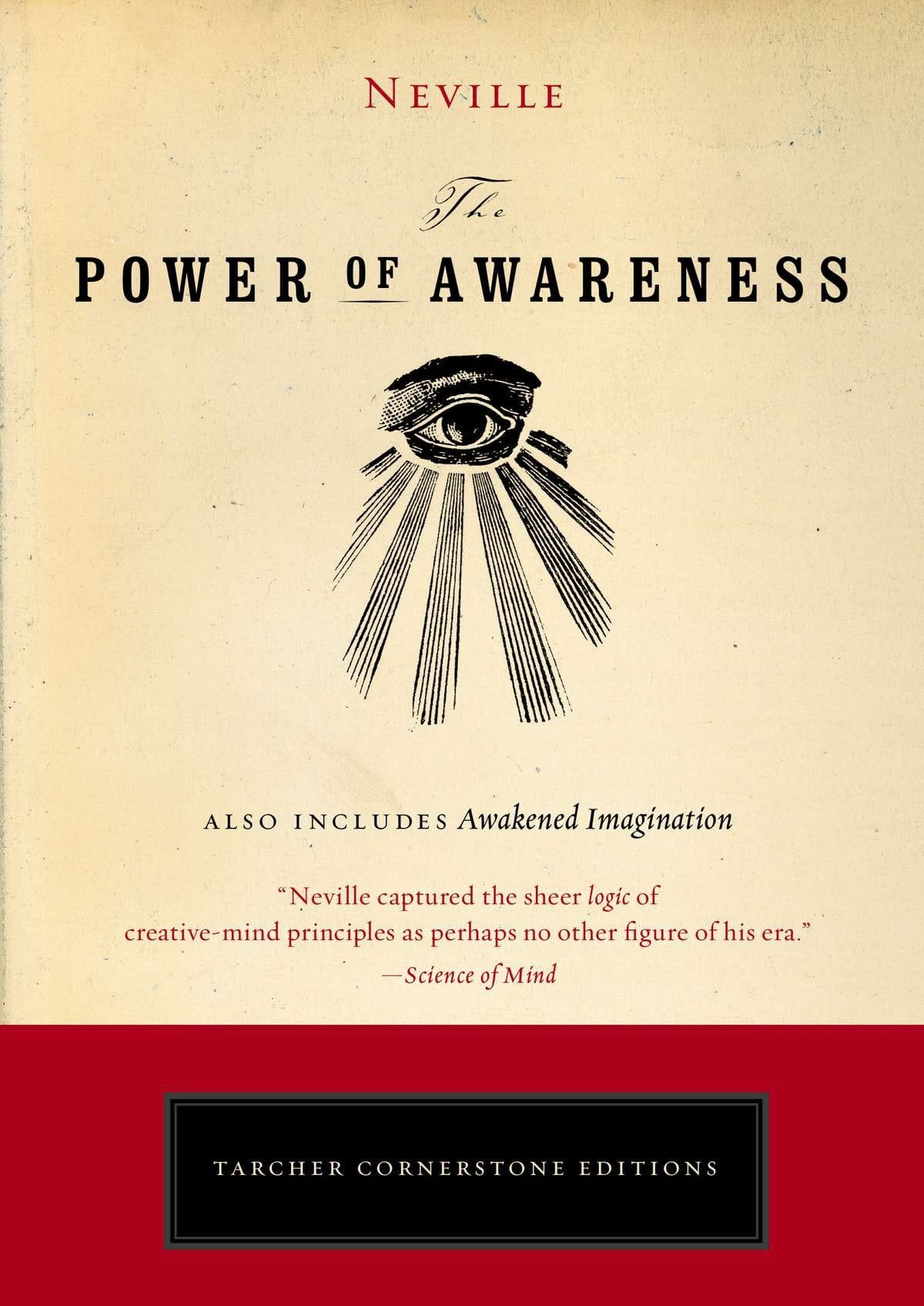
Imagine waking up to a life where your deepest desires, whether a dream career, financial freedom, or vibrant health, are your everyday reality. This isn’t a fantasy; it’s the promise of Neville Goddard’s The Power of Awareness, a timeless guide to manifesting through the Law of Assumption.
Published in 1952, this book distills Goddard’s teachings into a practical blueprint for transforming your life by harnessing the power of your consciousness. As a fresh graduate, I used these principles to land a Landscape Architect position, defying the odds as the only woman among four finalists.
Table of Contents
Who Was Neville Goddard?
Neville Goddard (1905–1972), a Barbadian mystic, taught that imagination is the divine force shaping reality. His philosophy, blending metaphysical and biblical insights, centers on consciousness as the sole creator. The Power of Awareness, enriched with Goddard’s handwritten notes in later editions, offers a clear, actionable guide to manifesting through the Law of Assumption: what you assume to be true becomes your reality. This book is a cornerstone for anyone ready to transform their life.
The Power of Awareness Summary
In this summary, I’ll break down the book’s core concepts, share actionable steps to show how you can shape your reality. Let’s dive into the magic of Goddard’s wisdom and unlock your creative potential.
Chapter 1: I AM
Goddard introduces the core idea that “I AM” is the self-definition of God (Exodus 3:14), the unchanging center of your consciousness. Everything you experience stems from this “I AM,” shaped by your self-concept. Whether you see yourself as successful or struggling, your reality reflects that assumption. “Consciousness is one, manifesting in legions of forms,” Goddard writes, urging you to redefine your “I AM” to align with your desires.
Chapter 2: Consciousness
Consciousness is the only reality, the “first and only cause-substance” of life. Your external world, circumstances, objects, events, is a projection of your inner state. Goddard rejects the idea of a separate external world, emphasizing that “you and your environment are one.” To change your life, shift your consciousness by assuming a new self-concept, like “I am prosperous,” and watch reality conform.
Chapter 3: Power of Assumption
The Law of Assumption is The Power of Awareness book’s heart: “All that befalls a man… happens as a result of his state of consciousness.” Transformation starts with a burning desire to be different, followed by assuming the feeling of your wish fulfilled. Goddard advises “thinking from” the desired state (e.g., feeling employed) rather than “thinking of” it, making the outcome inevitable through persistent belief.
Chapter 4: Desire
Desire is the spark of transformation, but it must be paired with the assumption of fulfillment. Goddard stresses that “the ideal you seek… will not manifest itself until you have imagined that you are already that ideal.” Fully abandon yourself to the feeling of your desire, letting it crowd out all doubts, to turn your dream into reality.
Chapter 5: The Truth That Sets You Free
Life is a psychological drama driven by your assumptions. By visualizing and feeling your desire as already fulfilled, you reshape your consciousness. Goddard emphasizes a “controlled imagination and well-sustained attention” to focus on the wish fulfilled, ensuring the subconscious accepts it as fact, leading to physical manifestation.
Chapter 6: Attention
Attention is the “inner force” that directs manifestation. Focusing solely on the feeling of your wish fulfilled excludes distractions. Goddard suggests a nightly exercise: review your day in reverse order to strengthen your attention, preparing your mind to hold the desired state consistently.
Chapter 7: Attitude
Your assumptions shape what you see and do. Goddard cites experiments showing that perception depends on expectations, not just reality. A negative attitude, like assuming someone is unfair, creates that experience. Shift your attitude to assume the best e.g., a harmonious relationship and your reality will reflect it.
Chapter 8: Renunciation
Renouncing evil means withdrawing attention from undesirable states and focusing on what you want. Instead of resisting negativity, give “beauty for ashes” by concentrating on the ideal. Prune your imagination of unlovely thoughts to cultivate a consciousness of righteousness, aligning with your desires.
Chapter 9: Preparing Your Place
Everything you desire already exists; you must claim it by assuming it’s yours. “All is yours. Do not go seeking for that which you are,” Goddard writes. By imagining yourself in the desired state e.g., living in a dream home, you prepare the psychological “place” for its manifestation.
Chapter 10: Creation
Creation is finished; all possibilities exist now in an “eternal now.” Manifestation is about becoming aware of what already is. Your self-concept determines which portion of creation you experience. Assume you’re in your desired state, and your attention will align with events that bring it to life.
Chapter 11: Interference
You have the power of intervention through imagination. By assuming a higher self-concept, you alter your future. Goddard likens imagination to “Him that is able to do exceeding abundantly above all that we ask,” urging you to focus attention on the ideal to reshape your reality.
Chapter 12: Subjective Control
Controlling your attention in the subjective (inner) world is key to changing your life. While external impressions dominate daily life, deliberately directing attention to your desired state e.g., feeling successful, allows you to master your fate and manifest your goals.
Chapter 13: Acceptance
Complete acceptance of your wish as fulfilled opens “the windows of heaven” (Malachi 3:10). By fully entering the spirit of the desired state, you bridge the gap between imagination and reality. Trusting this process ensures your assumption manifests.
Chapter 14: The Effortless Way
The Law of Assumption follows the principle of “least action,” requiring minimal energy and time. By assuming your desire with ease, you align with its reality without force. Goddard advises being still and knowing you are what you desire, avoiding futile daydreaming.
Chapter 15: The Crown of the Mysteries
The assumption of the wish fulfilled is the “crown of the mysteries.” By acting as if you already possess your desire, you guide your subconscious toward its realization. This psychological shift dictates events, making your dream a present fact.
Chapter 16: Personal Impotence
You cannot force outcomes, as creation is finished. Instead, surrender to the Law of Assumption, conforming to its truth. By yielding to the feeling of your wish fulfilled, you allow your desire to express itself through you naturally.
Chapter 17: All Things Are Possible
With faith in your assumptions, all things are possible. Goddard shares his 25 years of success using this law, emphasizing unwavering belief in the wish fulfilled. By disregarding sensory evidence, you merge with your infinite being, making miracles possible.
Chapter 18: Be Ye Doers
Action follows assumption. Being a “doer” means embodying the state of your desire, not just hearing about it. By persistently assuming your ideal, you become magnetic and creative, driving out old self-concepts to manifest the new.
Chapter 19: Essentials
Three essentials drive manifestation: intense desire, physical immobility (a relaxed state akin to sleep), and assuming the wish fulfilled. Goddard advises entering a drowsy state to focus attention, imagining your desire with vivid sensory detail to make it real.
Chapter 20: Righteousness
Righteousness is the consciousness of already being what you want, not moral adherence. Sin is missing the mark by not embodying your desire. By assuming you already are your ideal self, you transcend limitations and enter the “kingdom of heaven.”
Chapter 21: Free Will
Free will lies in choosing your assumptions, not controlling events. Everything happens automatically based on your consciousness. By assuming “I AM” the desired state, you align with God’s will (present tense), altering your future without external effort.
Chapter 22: Persistence
Persistence is crucial. Goddard uses biblical parables, like the friend seeking loaves (Luke 11:5–9), to show that “shameless impudence” in assuming your wish fulfilled ensures success. Frequent, vivid assumptions make the state feel natural, leading to manifestation.
Chapter 23: Case Histories
Goddard shares real-life examples: a soldier manifesting an honorable discharge by imagining his New York apartment, a businessman visualizing his family name on a building to reclaim it, and a boy winning a dog through a contest. These stories prove the law’s efficacy.
Chapter 24: Failure
Failure occurs when your assumption lacks naturalness. If the desired state doesn’t feel real, it won’t manifest. Persistently fill your consciousness with the feeling of being what you want, and overcome errors by trusting the law’s truth.
Chapter 25: Faith
Faith is “the substance of things hoped for” (Hebrews 11:1), the conviction that your assumption is real. Lack of faith leads to failure, as it denies the reality of your desire. By persisting in the assumption, you align with its truth, ensuring success.
Chapter 26: Destiny
Your consciousness creates your destiny every moment. By understanding you are the sole creator, you can consciously shape your future, rising to higher states and manifesting creation’s wonders through deliberate assumptions.
Chapter 27: Reverence
You are God, the “I AM” that creates reality. This truth fills you with reverence, a profound awe for your infinite being. By living with this awareness, you align with your creative power, making your life richer and your manifestations more profound.
How to Apply the Law of Assumption
Goddard’s teachings are actionable. Here’s a step-by-step guide to apply the Law of Assumption, drawn from the book’s principles:
1. Clarify Your Desire
Define your goal with precision. Want a new career? Specify the role, company, and feelings associated with it. I wrote in my journal: “I am a Landscape Architect at a prestigious firm, designing vibrant spaces and thriving in a supportive culture.” Clarity sets the stage (Chapter 4).
2. Assume the Wish Fulfilled
Enter the state of your desire by feeling it as already real. Goddard’s “State Akin to Sleep” (SATS) technique is powerful: before bed, visualize a short, vivid scene like signing a contract or receiving praise and loop it until it feels real (Chapter 19). I imagined my boss congratulating me, my hands tracing blueprints, and the joy of success.
3. Live in the End
Act as if your desire is already yours. This means adopting the habits, confidence, and mindset of your future self. I began studying landscape design trends and networking with confidence, embodying the architect I assumed I was (Chapter 9).
4. Persist Through Doubt
When reality contradicts your assumption, persist. Goddard advises ignoring sensory evidence that denies your desire (Chapter 21). Despite initial rejections, I kept visualizing my success, trusting the process.
5. Control Your Inner Speech
Your self-talk shapes your reality. Affirmations like “I am thriving” or “I am chosen” reinforce your assumption. I whispered, “I am the perfect candidate,” during quiet moments, aligning my mind with my goal (Chapter 7).
6. Take Inspired Action
While imagination is key, inspired action bridges the gap. Apply for jobs, network, or take steps aligned with your assumption. My persistence led me to refine my portfolio and connect with industry professionals, paving the way for my offer (Chapter 11).
Common Pitfalls and How to Avoid Them
Goddard warns of obstacles in Chapter 24 (“Failure”). Here’s how to navigate them:
- Lack of Naturalness: If your assumption doesn’t feel real, you’ll struggle. Persistently imagine your desire until it feels natural, like my nightly visualizations of being an architect.
- Distraction by Senses: Ignore external evidence contradicting your assumption. I dismissed early rejections, focusing on my inner reality.
- Inconsistent Assumptions: Mixed signals (e.g., assuming success but fearing failure) confuse your subconscious. Stick to one dominant state.
- Lack of Faith: Believe in your imagination’s power. Goddard says, “Faith is the awareness of the reality of that which you assume” (Chapter 25).
Why The Power of Awareness Stands Out
Unlike other manifestation techniques, *The Power of Awareness* emphasizes that consciousness is the sole creator, not external forces. Goddard’s focus on “thinking from” the desired state, rather than hoping for it, sets it apart.
His biblical references, like “Be still and know that I am God” (Psalm 46:10), ground the teachings in spiritual wisdom, while practical examples, like the soldier’s discharge, make them accessible. The book’s clarity, enhanced by Goddard’s handwritten notes, offers a direct path to mastering your reality.
Final Thoughts: Start Creating Your World Today
*The Power of Awareness* is more than a book, it’s a call to recognize your divine creative power. By assuming the feeling of your wish fulfilled, you become the architect of your life. Start small: assume a small win, like a kind gesture or a financial boost, and watch your confidence grow.
As Goddard writes, “You are God… the creator” (Chapter 27). My journey from a novice to a Landscape Architect proves that persistence in the Law of Assumption can defy the odds. Grab a journal, assume your dream is real, and start shaping your reality. What will you create today? Share your manifestation stories in the comments, I’d love to hear them!