
“We all need a little love, reminders and inspiration; those are exactly what our gifts are made to do.”
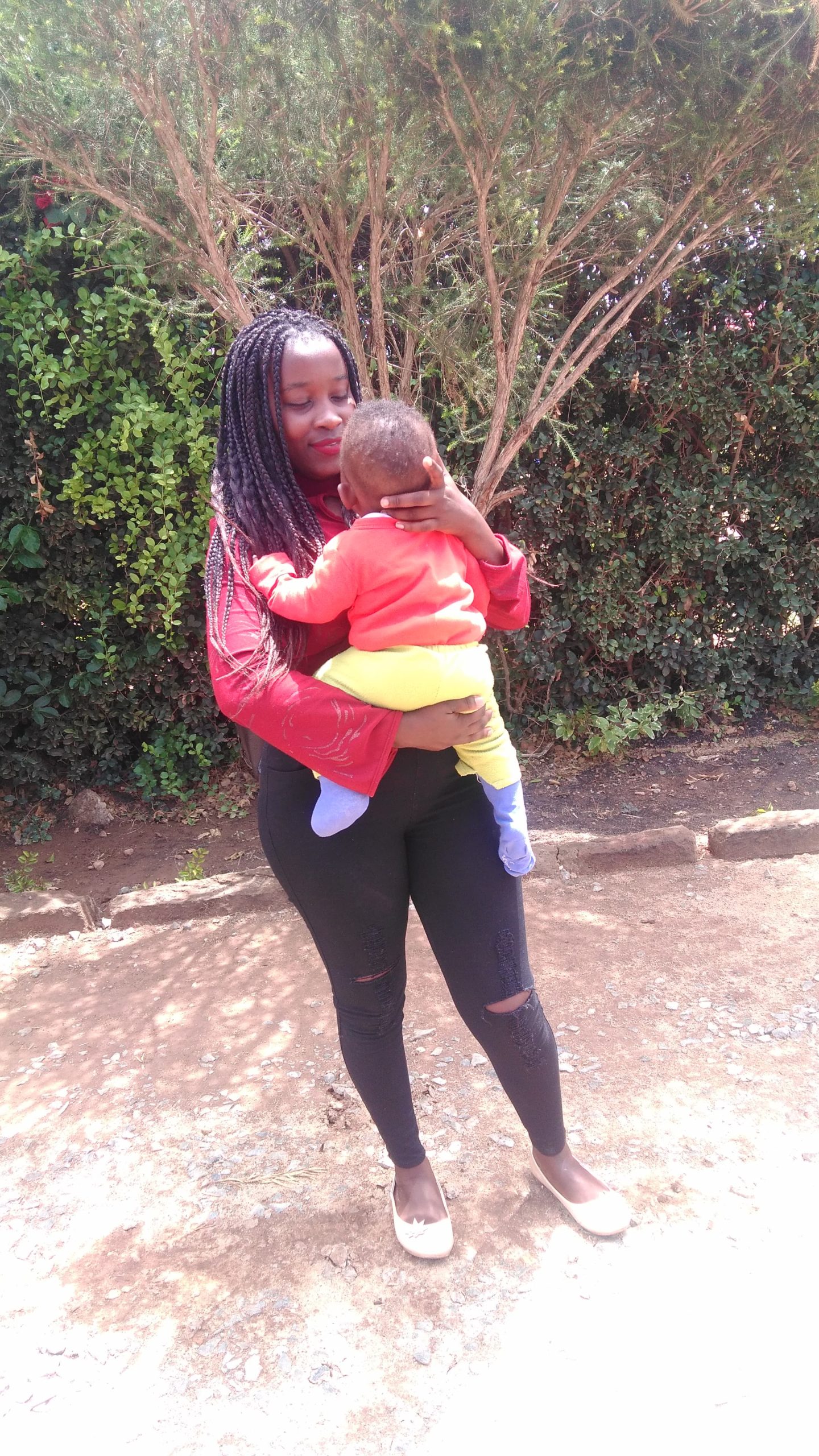
The story of Garo Gift Shop didn’t begin in a boardroom or from a funding pitch. It began in a small room filled with borrowed time, sleepless nights and the tender urgency of motherhood. It began with her son, Adriel and the unshakable resolve to build something for him, even when the world around her was still unsure of her.
She hadn’t planned to become a businesswoman. But life had already interrupted her blueprint once, when she found out she was pregnant at eighteen. And it was from that same storm of uncertainty and responsibility that a spark ignited.
She had always been a creative soul. In high school, she dabbled in design, letting her hands speak where words failed. It was a design class assignment during university, a simple task to show the principles of landscape design using paper, that led her down a rabbit hole of Pinterest searches. That’s when she stumbled upon a technique she’d never seen before: paper quilling. Spirals and coils of colored paper form intricate patterns. It felt like magic. It looked like healing. And it held her attention like nothing else had in a long time.
Curious, she tried making her first piece, thin strips of paper carefully rolled, shaped and arranged with a meditative precision. She wasn’t sure what would come of it. But when her roommate’s friend saw it, they bought it on the spot. No hesitation. Just admiration.
That one sale changed everything.
It didn’t take long before she was making more cards, each one a little better, a little bolder. What began as an experiment became a practice. A practice that soon became a product. And a product that became her way forward.
Graduation season was around the corner. While others were preparing gowns and speeches, Vinaywa was preparing stock. Together with her friend Patience, she made a few handmade pieces for upcoming graduates, each card bursting with color, depth and soul. They didn’t just sell cards; they sold memories. Symbols of accomplishment. Moments pressed into paper.
Her friend’s name, Patience, wasn’t lost on her. Because patience, as it turned out, was exactly what this dream would demand. She was still in university. Still figuring out how to be a present mother and an ambitious student in a system that didn’t make space for both. She didn’t have a marketing budget. She didn’t have startup capital. What she did have was skill, belief and a fire in her belly no hardship could extinguish.
Her work quickly started gaining traction, sold to classmates, neighbors and friends of friends. She never relied on flashy ads or discounts. She let the art speak for itself. Every swirl of paper. Every personalized message. Every card told a story and it was that authenticity that made people return. Slowly but surely, the brand began to take form.
She knew it was time to expand. But expansion needed a platform. A website. A real online store that could hold everything she’d worked so hard to create. She asked around and the answer came like a slap: a professionally built e-commerce website would cost her about 45,000 KSH. It might as well have been half a million.
At the time, she was still on HELB loans, making ends meet through side gigs on Fiverr and transcription jobs, juggling invoices with baby bottles and pulling all-nighters for both class assignments and client deadlines. She didn’t have that kind of money to spare.
Desperation can lead to risk. And she took one, a bet that promised high odds and higher reward. From her 12,000 KSH earnings on Fiverr, she gave in to someone who claimed they had the “winning odds.” She paid 1,000 for the tip and placed a 3,000 bet.
She lost it all.
That loss stung deeper than money. It pierced through her trust. She could’ve broken down. She could’ve quit. But instead, she turned her frustration into fuel. She learned her lesson and decided to learn coding and hacking to get back at the guy. In the process, she stumbled upon WordPress and created her first free website.
“If no one will build this for me, I’ll learn to build it myself.”
That decision rewrote her entire trajectory. She dived headfirst into learning how to create a website. Not just the basics, she wanted to understand everything. Coding. Hosting. Domains. WordPress. Plugins. She created her first site as a free subdomain, which had limits, sure, but it gave her a start.
From her small shared room, often with Adriel playing beside her, she stayed up late watching YouTube tutorials, reading blog after blog and practicing on drag-and-drop tools until it made sense. It took months. Nearly a year. Trial and error. Late nights. Moments of doubt. But eventually, it happened.
She bought her own domain. Paid for her own hosting. And built a fully functional e-commerce store for Garo Gift Shop, named after Adriel’s second name. It was a small site, but it was hers. From there, everything began to shift.
She started applying the SEO skills she’d picked up along the way. Targeting the right keywords. Naming her products with care. Crafting descriptions that felt like conversations. Bit by bit, her store started ranking. First for “handmade cards.” Then “success cards.” Then “personalized gifts Kenya.”
During that year’s exam season, her effort bore fruit. Sales surged. She made over Ksh 232,000 in revenue. And for the first time, she felt what it meant to be both an artist and an entrepreneur. Garo wasn’t just growing, it was working. Recognition came next.
One of the country’s most respected educational institutions, KEF, found her. They placed a bulk order. And they didn’t stop. Year after year, they returned, making her their go-to supplier for custom cards.
From there, referrals multiplied. Clients told their friends. Schools. Corporate teams. Even people she had never met would DM her just to say, “I saw your card at my friend’s graduation. Can I order one too?” She didn’t need billboards. She didn’t need influencers. Her work did the talking. And people listened.
After graduation, she took a breath, but not for long. She wasn’t done. With the confidence of a proven product and the support of her growing client base, she pushed Garo from an online-only space into a physical one.
Her first shop opened at Village Market, a dream location that once felt like a fantasy. Then came Nairobi CBD. Then Mombasa. Then Eldoret. Each branch is an extension of her original dream. Each customer had an answer to the prayers she whispered back when she was crafting cards on the floor beside her son’s crib.
But Garo was never just about gifts. It was a love letter. A remembrance. A way to honor life’s moments, no matter how small or large. Vinaywa had made a promise from the beginning to build a brand that reflected her values: Originality. Thoughtfulness. Local craftsmanship. Connection. And that’s exactly what she did.
The shop wasn’t just stocked with merchandise. It carried her heart. Her experiences. Her story. A story born from motherhood, pressure and persistence.
Garo’s mission became clearer over time: To bring joy into people’s lives through meaningful, handcrafted gifts. To support local artisans. To make gifting more than a transaction, but a ritual of love and intention.
Her bestsellers became household favorites: Personalized mugs that brightened morning routines, handmade cards that captured memories in paper, customized art for new homes and first jobs and corporate gift packages that stood out in a sea of generic offerings. Every product that left Garo’s shelves went out with a piece of her.
In hindsight, it’s easy to see the arc. The quiet college girl sketching ideas in a studio. The young mother cradled her baby with one arm and sketched designs with the other. The woman who built a business from borrowed data bundles and free blog templates. The entrepreneur who went from handmade cards to nationwide recognition. But in real time, it wasn’t so linear. It was messy. Risky. Hard.
There were still months when things slowed. There were still nights she questioned herself. Still, people underestimated what she was building. Still, systems that made it harder for a Black woman, especially a mother, to scale. But every time doubt whispered in her ear, she’d look at Adriel. And remember why she started.
Garo wasn’t just his name. It was his legacy. It was her promise to him, pressed into paper, inked into packaging and stitched into every order note she wrote by hand. “This is for you. This is for us.” Garo Gift Shop wasn’t just a shop. It was her proof that motherhood and ambition could not only coexist but thrive. That pain can be transformed into paper petals. That gifts, when made with heart, can change a life.
And hers had.
Completely.
Curation, for her, was never just about inventory. It was an act of reverence. A ritual rooted in meaning. Each product that made its way into the Garo Gift Shop had to pass through her silent filter, a heart-led checklist she called the Garo Code:
Story – It had to carry a memory, a lineage, a truth.
Soul – It had to be crafted by hand, with ethical pay and process.
Scent – It had to awaken something familiar. A scent that reminded someone, somewhere, of home.
Symbol – It had to convey love, blessing, or celebration
She wasn’t just sourcing products. She was sourcing presence. She’d travel to villages and meet the makers herself. Talked to weavers under mango trees. Sat in woodshops in Kisumu. Learned the stories behind every motif, every stitch. This wasn’t just retail. It was a reclamation of culture, an offering. A platform where heritage became luxury.
By now, she had scaled beyond card tables and dorm room deliveries. Garo was becoming a household name. But she refused to grow for growth’s sake. She grew with intention. She was still the one behind the scenes, fine-tuning packaging to feel like poetry, rewriting product descriptions to feel like love letters. She ensured her brand was searchable online, ranking high for keywords like gift shop Nairobi, success cards Kenya and customized gift delivery.
But more importantly, she ensured Garo was unforgettable offline, in the stories told, in the smiles unwrapped, in the nostalgia held in each product. She sourced ideas globally, bringing curated trends from Tokyo, Paris and Lagos. She didn’t just predict trends. She preempted them. She created systems that could bend but not break: from supply chain to fulfillment, from branding to backup plans during algorithm shifts, pandemics, economic dips, or power outages.
And she always gave back.
Garo was a shop, yes, but also a school of generosity. She launched Gift Back Week every December: 10% of all proceeds went toward scholarship funds for girls in Kenya. She started Love Notes to Kenya, inviting customers to write handwritten thank-you letters to artisans, which were then read aloud at the monthly maker showcases.
She designed The Garo Corner, a play and learning space inside every shop, where children could explore Kenyan cultures through ethically made toys and illustrated storybooks. She stocked baskets with Swahili proverbs, puzzle maps of East Africa and coloring sheets of mythical African queens.
She once said at an award show,
“This shop exists because a young single mother believed her son deserved to grow up in a country where his culture wasn’t hidden, but celebrated. And where his mother wasn’t pitied, she was powerful.”
From the beginning, her promise was never just to customers. It was to her community. Each sale sent ripples of dignity outward: A single mother in Murang’a got paid fairly for her banana fiber baskets. A retired artisan found his art revived and displayed in modern homes. A girl in Kibera saw her school fees covered by December sales. She was planting seeds in gardens she would never walk through. And it gave her more joy than any paycheck ever could.
Garo became a collective, not just of artisans, but of dreams woven together. She created The Garo Collective, a mentorship incubator for young, Black, Kenyan women in design, gifting and entrepreneurship.
Every month, she hosted Design Your Destiny workshops, not just for customers, but for rural creatives, where she taught them: How to price their creativity. How to package with pride. How to believe in the value of their hands. How to pitch with power. How to say no without apology. How to rest without guilt. How to build a brand that magnetizes wealth.
She launched DIY craft kits, seasonal pop-ups and even participated in the Cape Town Art Fair and Dubai Design Week.
Garo had grown from a mother’s side hustle into a national brand. But even as the brand matured, her values never did. She didn’t scale fast. She scaled reverently. She didn’t just build a brand. She built a bridge between heritage and modernity, between survival and sovereignty, between girlhood dreams and grown woman glory.
It’s 11:43 p.m. The streets are silent, the kind of silence only dreamers know. She’s in her home studio packaging a final order. A custom memory box for a couple celebrating their 10-year anniversary. As she ties the final bow with twine and slides in a handwritten note, she exhales softly.
This, this is what she always wanted. Not just the revenue. Not just the recognition.
But the reverence. A business built not from hustle, but from healing. Not for applause, but for alignment. She whispers into the quiet air, as if Adriel and the ancestors can hear her, “We did it.” Then she switches off the studio lights, walks to her son’s room and kisses his forehead. Tomorrow, a new chapter begins.
Related: Name it Into Existence