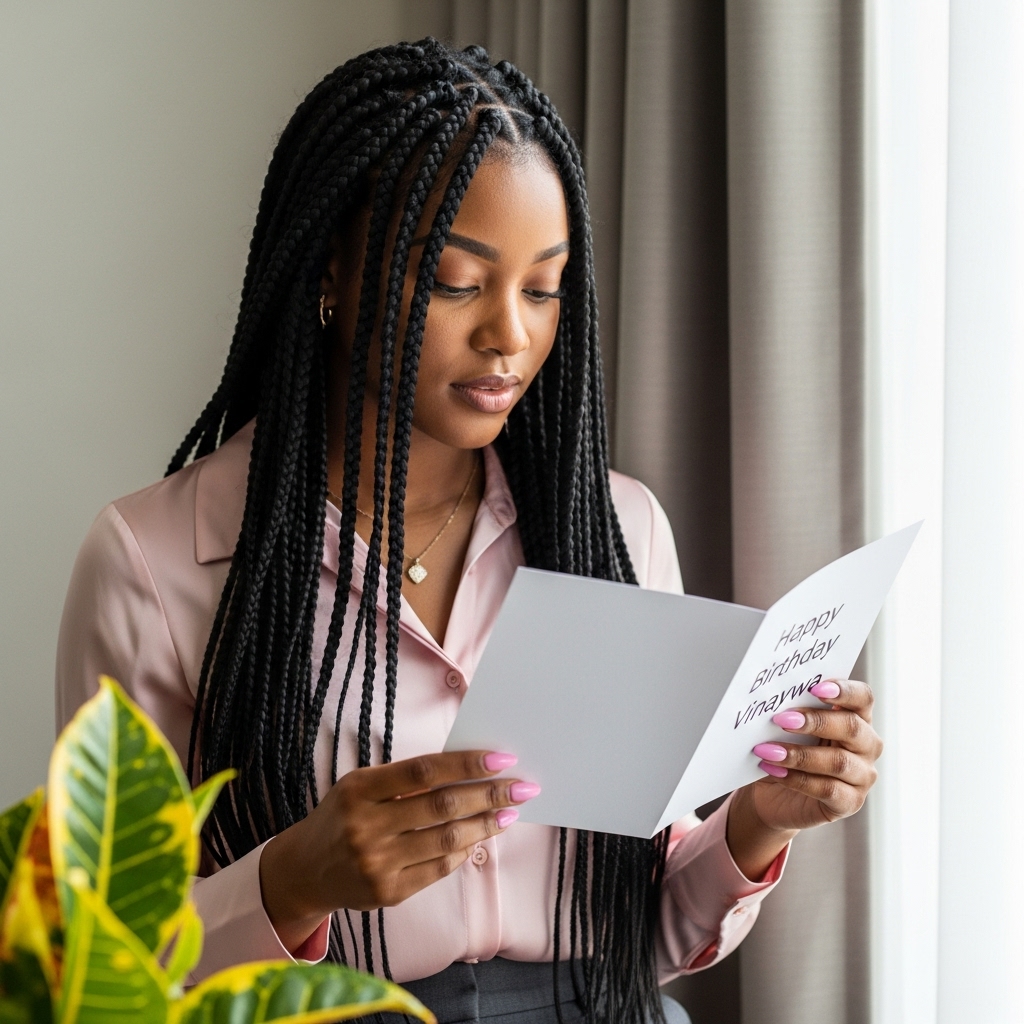
Before she was the woman whose name echoed in boardrooms, whose scent lingered in marbled villas, whose signature sealed multi-million-shilling deals… she was simply Vinaywa.
Not “CEO Vinaywa.”
Not “Vinaywa, the woman with the penthouse and the villa by the sea.”
Just… Vinaywa.
And some days, just “Mama Adriel.”
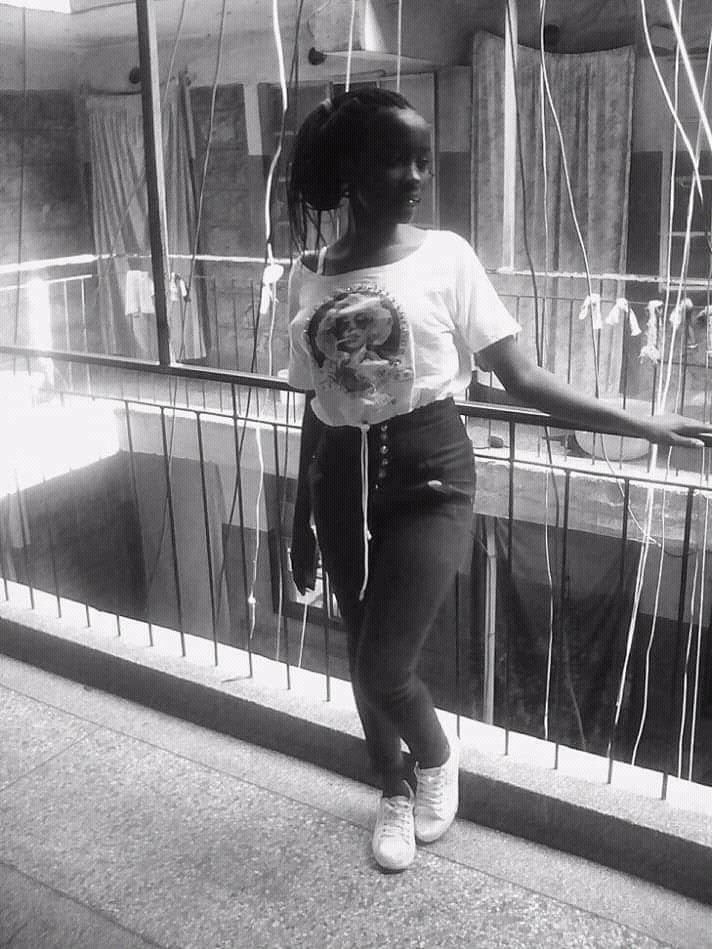
The air in Huruma Estate carried the weight of survival, a gritty perfume of charcoal smoke, mandazi frying and dreams deferred. The skyline shimmered beyond the concrete flats, a distant promise taunting the girl who sat on the rooftop balcony of a six-story walk-up. Her world was a single room, then a double, walls thin as hope, where laughter and arguments bled through from neighbors. She was the firstborn daughter, the keeper of her family’s aspirations, her shoulders already broad from carrying love and duty. Her name was Vinaywa, though the world hadn’t yet learned to speak it with reverence.
She sat cross-legged on the balcony, her sketchpad balanced on her knees, a pencil worn to a stub dancing across the page. Below, Huruma buzzed, matatus honked, touts shouted, “Tao! Tao! Tao!”, children shrieked in dusty alleys and women haggled over sukuma wiki at the market. This was her home, a crucible of hustle and hope, but her sketches were a vow, a lifeline to a life beyond the concrete maze.
The rooftop balcony was her sanctuary, a sliver of sky above the chaos. She’d climb up before dusk, before her mother called her to fetch water or stir ugali and lose herself in her sketches and designs. But up here, with the wind tugging at her braids and the clouds painting the sky in strokes of coral and ash, she was free. Her pencil traced the outlines of a dream home with palms swaying like whispers of peace. A craft studio for her art. “One day,” she whispered to the breeze, “I’ll live in a big house with flowers. I’ll be free.” The words were her first affirmations, raw but fierce, a belief that her reality could bend to her will. She didn’t know how she’d get there, but she knew it was hers.
Her parents were teachers, their lives stitched together by paychecks that unraveled before the month ended. They poured their hearts into classrooms, their chalk-dusted hands bringing home paychecks stretched thin by bills and dreams. They were her heroes, their tired smiles a testament to their fight to give her more. They poured love into their lessons at a small private primary school, but love didn’t pay bills. Birthdays came and went without fanfare, only one, when she was two, left a faint memory of cake and balloons. After that, celebrations were a luxury, like meat, which appeared once in a blue moon, one or two pieces drowned in watery soup. Chicken carcass, scraps the wealthy fed to pets, was a feast here, paired with ugali and kienyeji greens. She savored each bite, but her hunger wasn’t just for food, it was for freedom, for a life where joy wasn’t rationed like water.
Water. That was another battle. The estate’s supply came once a week, on Monday evenings, controlled by cartels who sold it back to families at a price. She’d trudge down six flights of stairs after school, her school bag heavy with books and dreams, to fetch buckets from the ground floor or neighboring plots. Sometimes, she’d wait late into the night, her mind on homework, her calves aching, her eyes heavy, because buying water wasn’t always an option. “We’ll wait for the tap,” her father would say, his voice firm, his teacher’s pride refusing to bow to thieves. So she waited, her siblings needing baths, her mother needing water for ugali, her heart vowing, “One day, I’ll have taps that never run dry.”
Their flat was a microcosm of Huruma’s hustle. Shared washrooms reeked, lines forming at dawn, their hygiene a gamble she hated, especially when illness struck and waiting felt like a theft of dignity. Clothes and shoes vanished from hanging lines, water left in basins outside stolen by neighbors. She’d chase after a missing high-waisted jeans, her shouts lost in the estate’s din, only to return empty-handed, whispering, “I’ll own clothes no one can touch. Yet, her parents’ resilience shone through. They made do, weaving dignity from scarcity, teaching her to hold her head high even when the world felt small.
She loved them fiercely for it. They weren’t perfect, stress sometimes spilled into sharp words or a switch across her legs, but they gave her what they could. A late chore, a spilled cup and their hands would fly, not from cruelty but exhaustion, their beatings a release of burdens they carried. At fifteen, after a strap stung her for forgetting to fetch water, she hid her tears and vowed, “When I have my child, I’ll give them love, not pain.” That promise, whispered in the dark, was her pledge to rewrite her story, to honor her parents’ love while breaking their cycle.
Her father, with his quiet pride, enrolled her in a good high school, a sacrifice that felt like a lifeline. Her mother, with her warm hands, brought mandazi to visiting day when others arrived with KFC buckets and chocolate bars. She smiled through the pang of comparison, grateful for her mother’s presence, but vowing her future children would never know lack. She’d throw them birthdays with cakes piled high, take them to the coast, let them ride bicycles she’d never learned to pedal.
Promises of bikes had dangled in her childhood, tied to exam scores she always aced, but paychecks couldn’t keep up. Her father promised a bicycle if she topped her class, its imagined wheels gleaming in her mind. She studied by candlelight, her eyes straining and scored 92s, her name pinned on the school’s board. But the bicycle never came, her parents’ paychecks swallowed by rent and fees. Disappointment stung, but she turned it to fire. She didn’t resent her parents, she understood their fight. Instead, she vowed to rewrite the story for herself and those she’d love.
High school was her proving ground. While classmates giggled over crushes and weekend plans, she hustled. She calligraphed love letters for girls too shy to confess, her elegant script earning her coins for break snacks. She hand-stitched torn skirts, her needle threading confidence into every seam. During holidays, she wove beaded Kenyan bracelets with beautiful patterns or names in bright colors, selling them to neighbors for pocket money. Her charcoal pencil sketches of faces and flowers became gifts or small sales, each one a step toward her dream. She tutored classmates in math, chemistry and physics, her patience turning formulas into shillings.
Art and design called her, but home science and art classes demanded materials; fabric, paint, needles, costs her family couldn’t afford. She dropped them, her heart aching as she traded passion for survival. “One day,” she promised herself, “I’ll buy a sewing machine and art supplies.” At 22, she did.
Her sketchpad was her sanctuary. On the rooftop, under a sky that leaked both rain and stars, she drew not just houses but lives, hers, her family’s. Each line was a prayer, each curve a rebellion against lack. She’d whisper affirmations into the night: “I will make it.” The Law of Assumption wasn’t a term she knew yet, but she lived it, believing her future was already hers, even when the present screamed otherwise.
College brought new battles. A HELB loan was her lifeline, stretched thin across rent, food and printing paper for her landscape architecture projects. She studied by candlelight when power failed, her eyes straining over textbooks and sketches. She sold handmade cards, their designs bursting with the color of her imagination. She built websites on free trials, teaching herself code and design between lectures. Job interviews meant long walks across Juja, her shoes worn but her pitch polished. Clients dismissed her, too young, too Black, too female. Rejection stung, but she’d cry in private, then rise sharper.
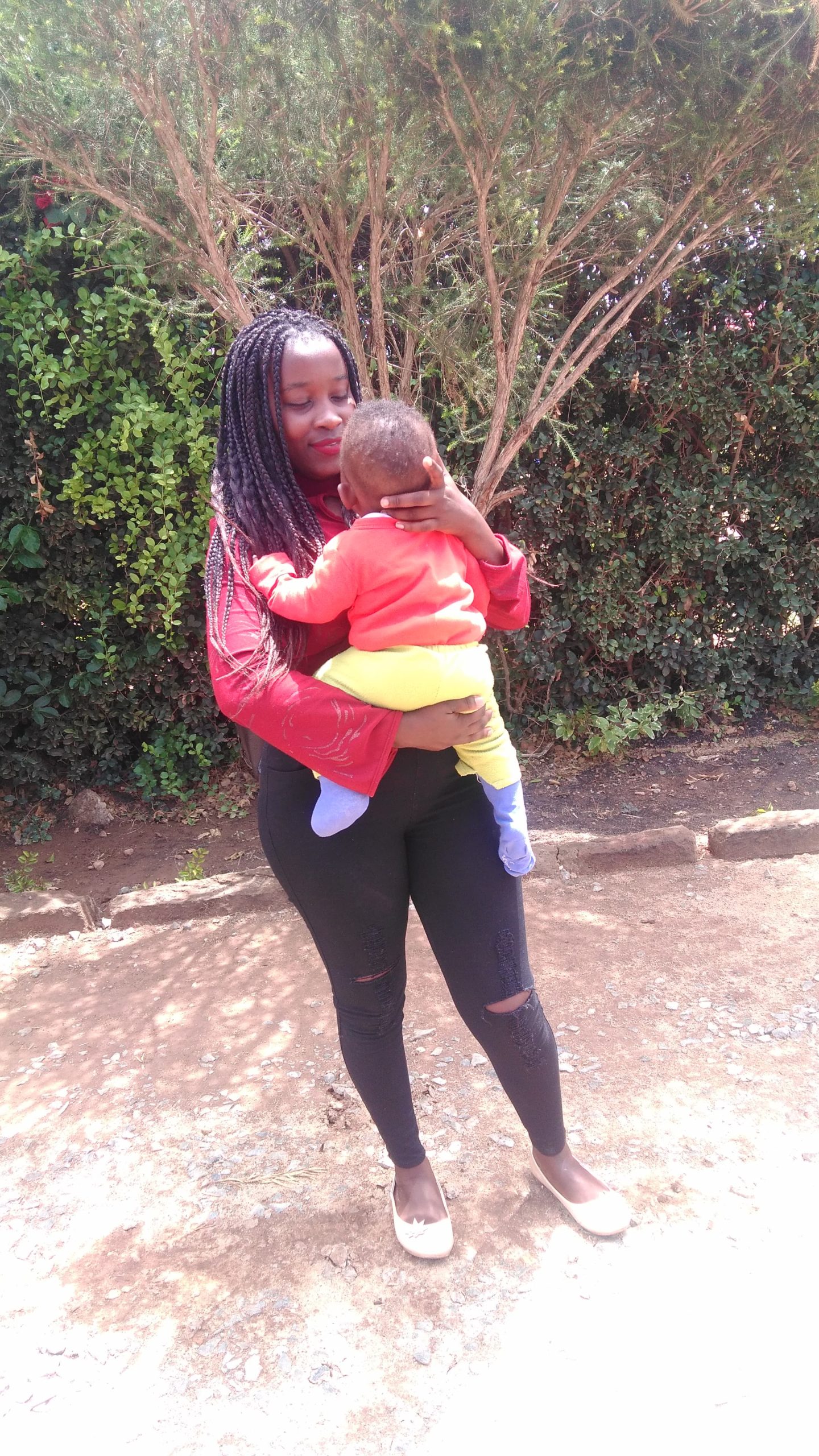
One night, at 19, everything changed. Under a leaking roof, rain tapping like a metronome, she cradled her son, Adriel. His tiny chest rose and fell, his warmth anchoring her to a new purpose. The world felt heavier, diapers, milk, a future she couldn’t yet see, but also clearer. She looked into his eyes, dark and infinite like the Nairobi night and made a vow: “I will never beg for love, peace, or opportunity. I will become the woman who creates it.” That promise was her turning point, a spark that ignited her empire.
She began to see herself differently. Not as the girl from Huruma, but as the architect of her destiny. She started Garo Gift Shop, a dream born from her high school hustles, selling artisan treasures. There was a need to provide for her son and this was just the beginning.
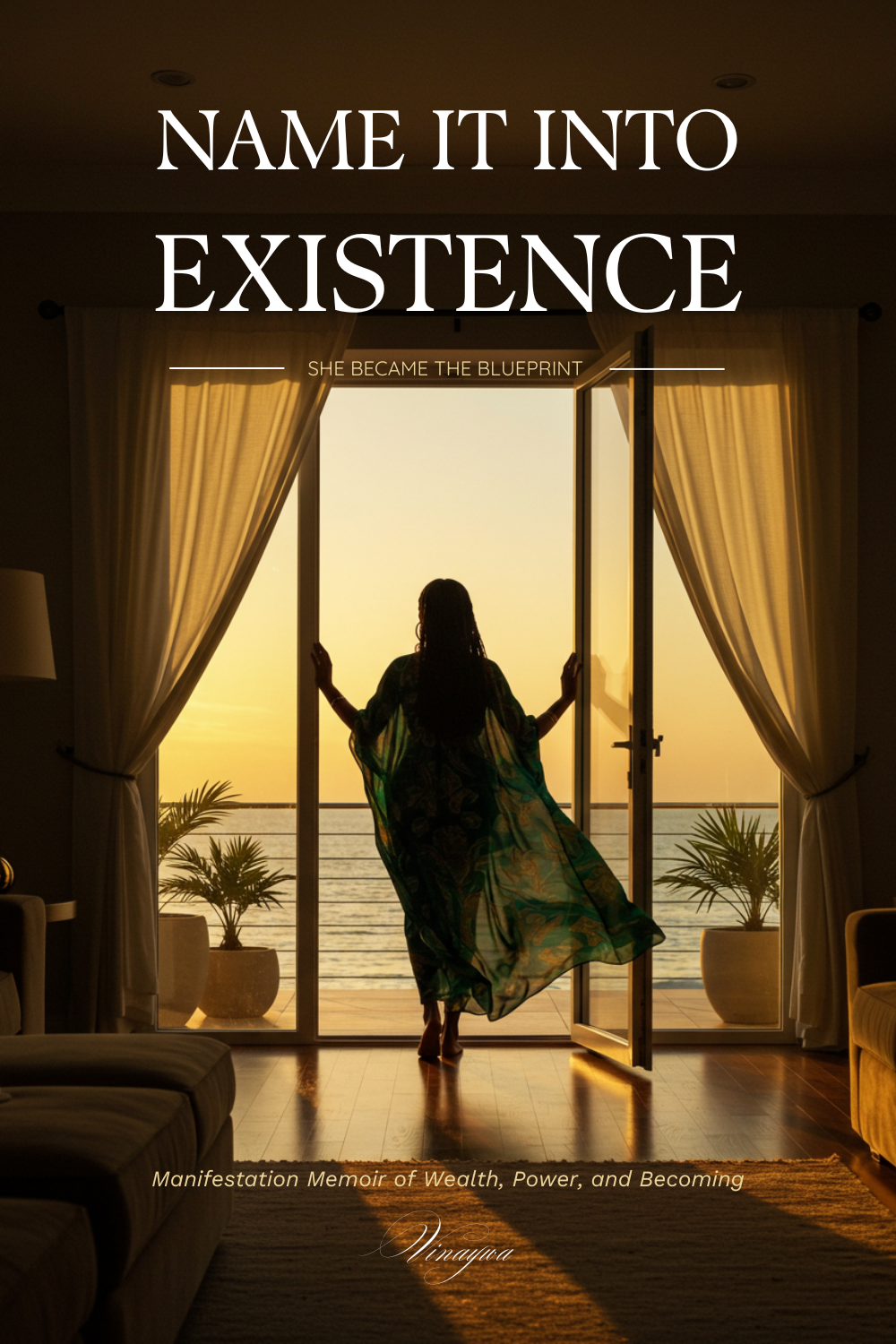
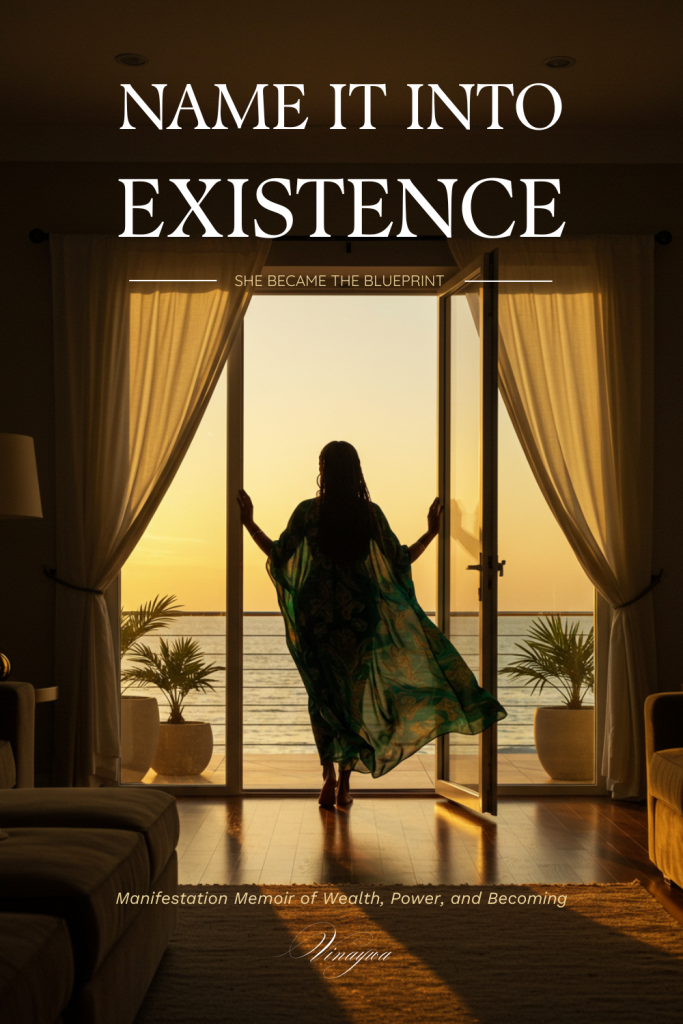
Years later, standing on her Muthaiga penthouse balcony, she’d remember that rooftop in Huruma. The girl with the sketchpad hadn’t just dreamed, she’d believed. She’d believed when water was scarce, when clothes were stolen, when mandazi was her only treat. She’d believed through rejection, through sleepless nights, through the weight of being a teenage mother. That belief, rooted in the Law of Assumption, had carried her from a leaking roof to cherrywood floors, from a single room to a skyline view.
She thought of her parents, their sacrifices woven into her success. They’d given her a foundation, not of wealth, but of grit and love. She’d honored them by rising, by buying that sewing machine, by designing gardens that bloomed where scarcity once stood.
As she sipped her lemon tea, she opened her journal. She wrote. “My past was my forge, my present is my masterpiece, my future is my legacy.” The words were a love letter to the girl she once was, a promise kept, a reality named.
If she could speak to the girl she once was, the sleepless, scared, brilliant girl who never stopped believing, she would cup her face gently and whisper:
You were never broken. You were becoming.
You were the warrior in the womb of your own evolution.
You were not late. You were not lost. You were on divine timing.
And one day, every sleepless night, every tear shed in silence, every Ksh 30 meal… will become bricks in your empire.
Even now, in her penthouse, she still lights a candle for her. The girl she once was. She doesn’t forget her. She honors her. Because without her grit, her rebellion, her softness… There would be no woman. She keeps a photo from her university days, young, wide-eyed, holding baby Adriel. It’s framed above her altar beside her vision board. A reminder. That she is both the seed and the tree. The storm and the sun. The girl and the woman.
To every woman reading this, she whispered through time: “Your roots don’t define your reach. Name your dreams and they will grow.”
Related: Name it Into Existence